
Home » Lump in the Groin
Lump in the Groin: Causes, Symptoms and What You Need to Know

Dr Thng Yongxian
Medical Director & Senior Consultant Hepatopancreatobiliary Surgeon
Liver Surgery Specialist
MBBS • MMed • MRCS (IRE) • FRCSED • FAMS
Table of Contents
- What is a groin lump?
- Causes of a lump in the groin
- Lumps on the inner thigh and pelvis
- Groin lumps in men
- Groin lumps in women
- Groin lumps in children and babiesGroin lumps in children and babies
- When a groin lump is an emergency
- How a groin lump is diagnosed
- Treatment options
- About the surgeon
- Frequently Asked Questions
Quick Overview:
- The most common cause is a swollen lymph node reacting to an infection, which usually settles within one to two weeks.
- Other causes include a skin cyst, a fatty lump called a lipoma and an inguinal or femoral hernia.
- A lump that is soft and comes and goes tends to be less concerning than one that is hard, fixed or growing.
- See a doctor if a groin lump lasts more than two weeks, keeps growing, becomes painful or comes with fever, night sweats or weight loss.
- Sudden severe pain with redness and vomiting needs emergency care.
Finding a lump in your groin can be unsettling, and the good news is that most are harmless and treatable. The groin is the crease where the lower abdomen meets the top of the thigh. A lump can sit right in the fold, spread a little onto the upper inner thigh or sit lower over the pelvis. The area holds skin, fat, lymph nodes, blood vessels and the inguinal canal, so a lump can come from any of these.
What is a groin lump?
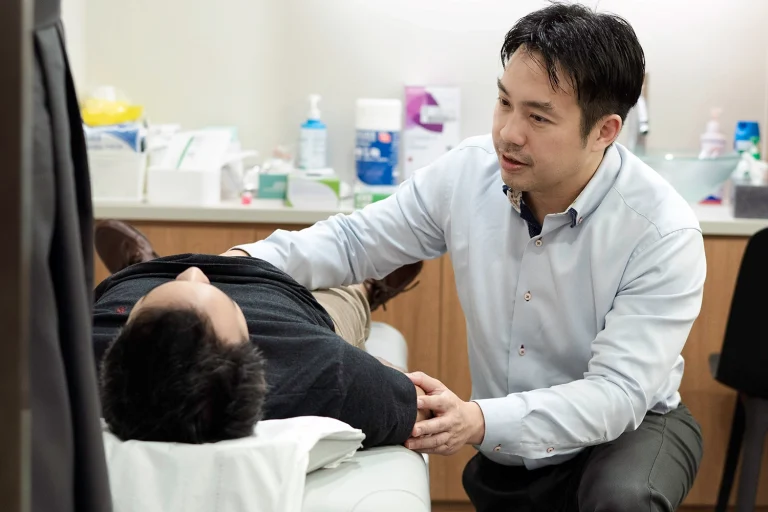
A groin lump is any swelling or bump in the crease between the lower abdomen and the thigh. It may sit on the surface under the skin or come from deeper structures such as the inguinal canal or the lymph nodes. Lumps vary in size, may be single or in a cluster and can be painful or painless. Because several different tissues meet here, the same symptom can have very different causes, which is why an examination matters.
Causes of a lump in the groin
These are the causes a general surgeon sees most often, ordered from the most to the least common.
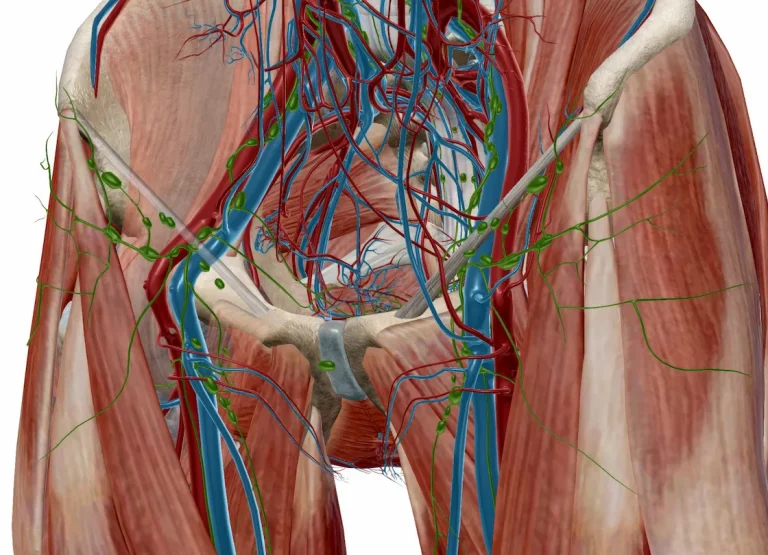
Swollen lymph nodes (the most common cause)
Swollen lymph nodes are the usual reason for a lump in the groin. The groin holds a chain of nodes, called the inguinal lymph nodes, that drain the legs, feet, genitals and lower abdomen. When they react to an infection or injury nearby, they enlarge into small lumps you can feel under the skin.
A reactive node is usually pea sized, soft to firm, movable and often a little tender. It tends to settle within one to two weeks once the cause clears, such as a cut on the leg, athlete’s foot or a viral illness. Sexually transmitted infections can also cause tender nodes in this area. Painful, tender nodes usually point to infection. A node that is painless but hard, fixed in place or growing over several weeks is the type that needs review, as is any node that appears with night sweats, unexplained weight loss or a lasting fever. These features are uncommon, though they help tell a simple reaction apart from something that needs further tests.
Skin cysts
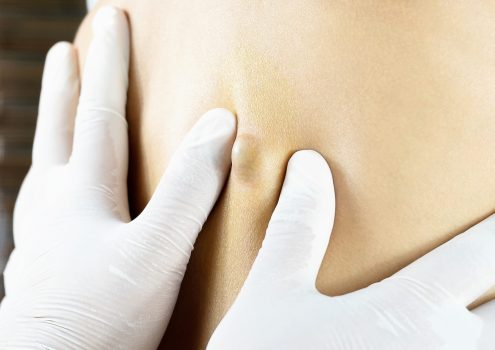
Sebaceous and epidermoid cysts are soft, smooth lumps that sit just under the skin. They are benign and often painless, though they can turn red and sore if they become infected. A cyst that keeps flaring up, grows or gets in the way can be taken out with a minor sebaceous cyst removal.
Lipoma (fatty lump)
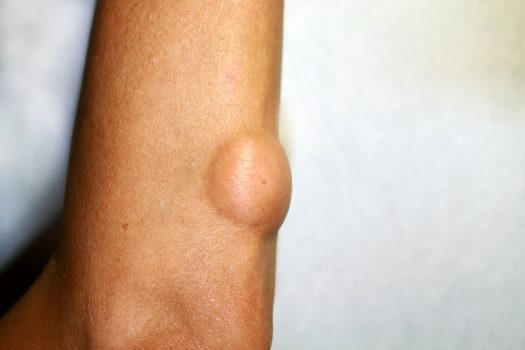
A lipoma is a soft, movable lump of fatty tissue. It grows slowly, is usually painless and is harmless. Many are simply left alone, though a lipoma that becomes large or uncomfortable can be removed, and lipoma removal is a short procedure done under local anaesthetic.
Inguinal hernia
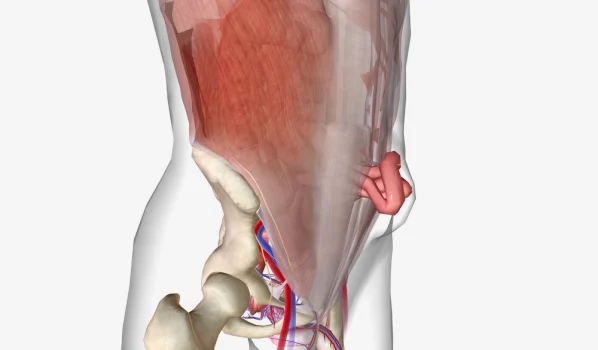
An inguinal hernia happens when tissue, such as part of the bowel, pushes through a weak spot in the abdominal wall. It shows as a soft bulge that often appears when you stand, cough or lift and eases when you lie down. It is the most frequent hernia in the groin and is more common in men. A hernia will not close on its own, so once it is confirmed it is put right with hernia repair.
Femoral hernia
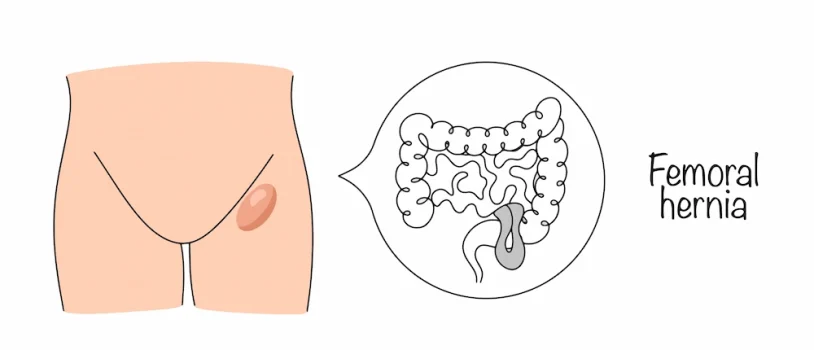
A femoral hernia sits a little lower, just below the groin crease, and is more common in women. It is more likely than other hernias to become trapped, so it is worth having checked early. It is corrected surgically in the same way as an inguinal hernia.
Skin infections and abscesses

Boils and abscesses can form in the groin, sometimes after shaving or waxing, and appear as red, warm, painful lumps that may drain fluid. Repeated painful lumps in the groin creases can be a sign of hidradenitis suppurativa, a condition affecting the sweat glands. Minor infections often settle with care, while larger or spreading ones need medical treatment.
Less common causes for lump in the groin
- In men:
- a hydrocele, varicocele or a swelling along the spermatic cord, which can extend toward the scrotum.
- In women:
- a Bartholin cyst near the vaginal opening, or a canal of Nuck cyst, which can feel like a hernia.

- Vascular:
- a saphena varix, a soft swelling from an enlarged vein that disappears when you lie down. A lump that pulses can rarely be a femoral artery aneurysm and needs prompt review.

- Rarely:
- a soft tissue sarcoma or a lymph node containing cancer, which is why a hard, fixed or growing lump is always assessed.
- In men:
- a hydrocele, varicocele or a swelling along the spermatic cord, which can extend toward the scrotum.
- In women:
- a Bartholin cyst near the vaginal opening, or a canal of Nuck cyst, which can feel like a hernia.
- Vascular:
- a saphena varix, a soft swelling from an enlarged vein that disappears when you lie down. A lump that pulses can rarely be a femoral artery aneurysm and needs prompt review.
- Rarely:
- a soft tissue sarcoma or a lymph node containing cancer, which is why a hard, fixed or growing lump is always assessed.
Lumps on the inner thigh and pelvis
Not every lump sits exactly in the groin crease. A swelling can appear a little lower on the upper inner thigh, or higher over the pelvis, and the causes overlap with those above. A lump on the inner thigh under the skin is often a cyst, a lipoma or a swollen node, while a bulge low over the pelvis can sometimes be a hernia. Same guidance applies: have it checked if it grows, becomes painful or does not settle.
Groin lumps in men
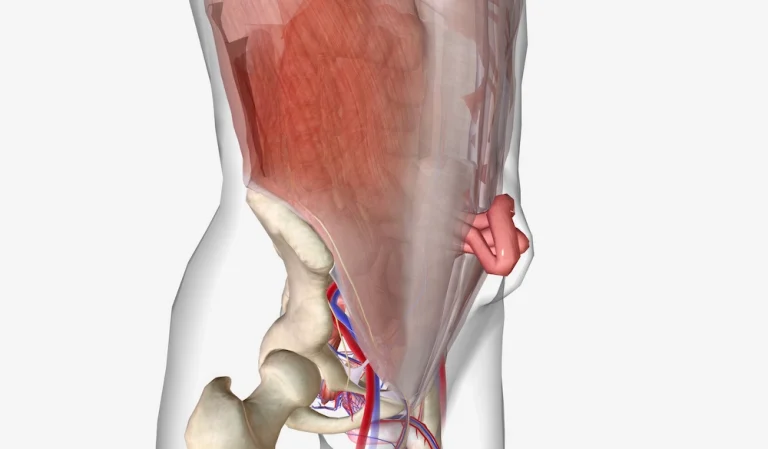
- In men the most common causes are an inguinal hernia, felt as a bulge that comes and goes, and swollen inguinal lymph nodes that follow an infection on the leg, foot or genitals. Lumps can also involve the scrotum or spermatic cord, such as a hydrocele or varicocele. Any lump that involves the testicle, or comes with pain, swelling or a dragging feeling, should be examined without delay.
Groin lumps in women
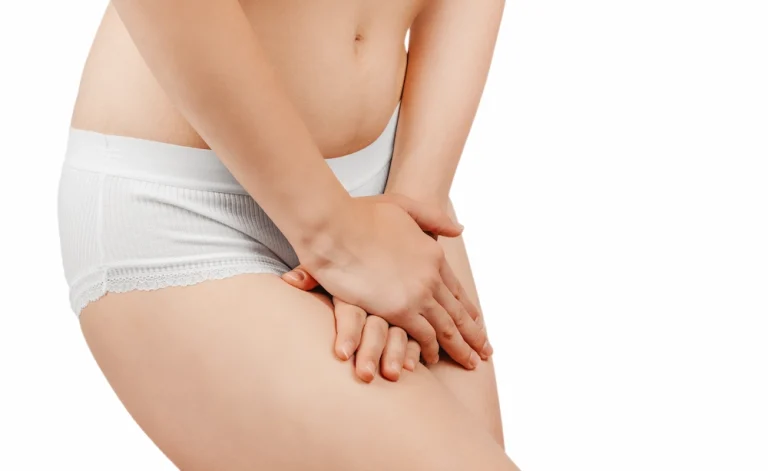
- In women a femoral hernia is more common than in men and sits just below the groin crease. Swollen lymph nodes here often react to a lower body or pelvic infection. Other causes include a Bartholin cyst near the vaginal opening, a canal of Nuck cyst that can feel like a hernia and tender lumps after shaving or waxing. A painful lump in the groin is usually from infection, while a lump that is hard, fixed or growing, or one with fever or weight loss, should be reviewed.

Groin lumps in children and babies
- Groin lumps in children are usually an inguinal hernia or a reactive lymph node from a passing infection. Most are not serious, though a lump in a baby or child is best checked by a doctor, especially if it is painful, firm or not settling.
When a groin lump is an emergency
Seek emergency care if a groin lump comes with any of these
- Sudden, severe pain in the lump or abdomen
- The lump becomes hard, tender and will not push back in
- Redness or discolouration over the lump
- Nausea, vomiting or a swollen, painful abdomen
- Fever alongside a rapidly worsening lump
These can signal a strangulated hernia or a serious infection, both of which need urgent treatment.
How a groin lump is diagnosed

- Physical Examination
- The surgeon feels for a bulge and may ask you to stand or cough so it is easier to feel

- Ultrasound
- A non-invasive scan that can confirm a hernia and show what is inside it
- CT Scan
- A detailed view of the abdominal wall, useful for large, complex or recurrent hernias and for planning repair

- MRI
- Occasionally used to look at soft tissue in more detail or when other scans are not conclusive
Diagnosis begins with a few questions about how long the lump has been there, whether it changes when you stand or cough and any other symptoms, followed by an examination of its size, texture and mobility. For a suspected hernia the doctor may use a cough impulse test, feeling the lump as you cough. An ultrasound is often the next step and can tell a hernia apart from a node, cyst or lipoma. A CT or MRI scan, blood tests, or a fine needle aspiration or biopsy may be added when a firm diagnosis is needed. Dr Thng Yongxian assesses and treats groin lumps at Precision Surgical Centre in Singapore.
Treatment options
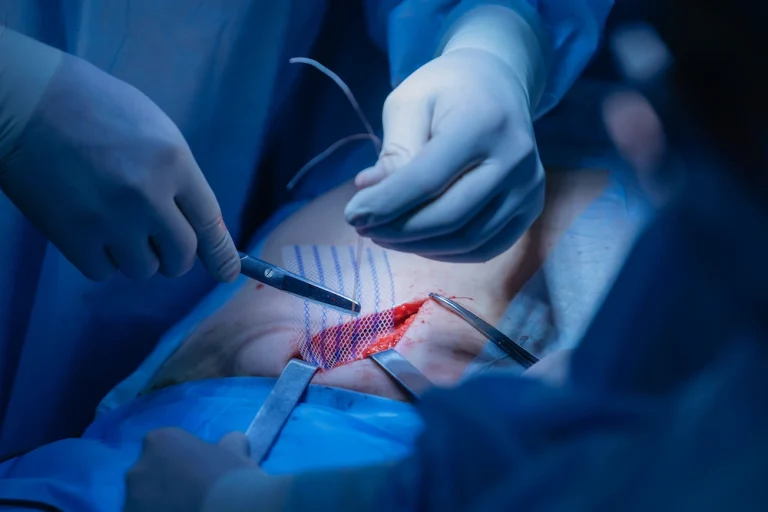
Treatment depends entirely on the cause, and many lumps need little more than monitoring.
- Watchful waiting: small, painless lumps such as some lipomas or settled lymph nodes can simply be reviewed over time.
- Medication and drainage: antibiotics for an infected lump, with drainage if an abscess has filled with pus.
- Minor surgery: a troublesome cyst or lipoma can be removed, and a skin lump excision is usually done under local anaesthetic as day surgery
- Hernia repair: an inguinal or femoral hernia is corrected with surgery, using either a keyhole or open technique with a mesh to strengthen the wall. If you are weighing up treatment, the hernia surgery cost page explains the fees involved.
- 6 weeks and beyond: Many people can progressively return to strenuous exercise and manual work, although recovery time varies according to the type of repair and individual circumstances.
The right option is decided with you after an examination, based on the cause, your symptoms and your general health.

About the surgeon
Dr Thng Yongxian
Senior Consultant General Surgeon, Hernia Repair Specialist
20+ Years of Experience
MBBS (SG) • MMed (Surg) • MRCS (Ire) • FRCSEd (Gen) • FAMS (Surg)
Dr Thng is a fellowship trained general surgeon whose practice includes the assessment and treatment of lumps and swellings in the groin, from hernias to skin cysts and lipomas. Alongside his work in liver and pancreas surgery, Dr Thng Yongxian sees patients for the everyday lumps and bulges that appear in the groin. This includes inguinal and femoral hernia repair, the removal of sebaceous cysts and lipomas and the assessment of swollen lymph nodes to work out what is behind them.
He graduated with a Bachelor of Medicine and Bachelor of Surgery from the National University of Singapore, completed his general surgery training in Singapore and went on to a subspecialty fellowship in minimally invasive surgery. He holds membership of the Royal College of Surgeons in Ireland and fellowships with the Royal College of Surgeons of Edinburgh and the Academy of Medicine, Singapore.
Where it suits the patient, Dr Thng offers both keyhole and open approaches, and he takes time to explain what a lump is, whether it needs treatment and the options available. If you have noticed a lump in your groin, he can examine it, arrange any scans required and talk you through the next steps.
Minimally Invasive Hernia Surgery
Experience in keyhole and laparoscopic abdominal procedures.
Focused on Patient Safety
Timely Access to Care
Credentialed at major private hospitals with coordinated scheduling.
Support with Insurance Pre-Authorisations
Help with documentation and insurance processes where applicable.
Frequently Asked Questions
I have a lump in my groin, should I be worried?
Most groin lumps are benign, but any new lump that lasts beyond two weeks, grows or becomes painful should be checked by a doctor.
Can a lump in the groin be cancer?
It is uncommon. A hard, fixed lump that keeps growing, or one with night sweats or weight loss, should be assessed to rule out lymphoma or other cancers.
Why are my lymph nodes in the groin swollen?
Swollen inguinal lymph nodes usually mean they are fighting an infection in the leg, foot or genitals, and they often settle within one to two weeks.
What does a hard lump in the groin mean?
A hard, fixed lump is more likely to need investigation than a soft, movable one, though many are still benign. An examination and ultrasound can confirm the cause.
Why do I have a painless lump in my groin?
Painless lumps are often lipomas, cysts or a reducible hernia. Painless does not mean harmless, so it is still worth having it looked at.
What is a pea sized lump in the groin?
A small, pea sized lump is often a swollen lymph node reacting to a nearby infection, and it usually settles once the infection clears.
My groin lump comes and goes, what could it be?
A lump that appears when you stand or strain and eases when you lie down is typical of a hernia and should be assessed before it becomes trapped.
How is a groin cyst treated?
Small cysts with no symptoms can be left alone, while cysts that are painful, infected or bothersome can be removed in a minor procedure.
Which doctor treats a lump in the groin?
A general surgeon can assess and treat most groin lumps, including hernias, cysts and lipomas.
Do groin lumps go away on their own?
Lumps from a minor infection often settle within one to two weeks, but hernias, lipomas and cysts do not resolve without treatment.
Corporate & Personal Insurance Plans
Our Clinic Location
@ Gleneagles Hospital Annexe Block
Precision Surgical Centre @ Gleneagles Hospital Annexe Block
- 6A Napier Road, #03-32 Gleneagles Annexe Block Singapore 258500
- (65) 9838 5827
- (65) 9838 5827
- gleneagles@precisionsurgicalcentre.com
-
Mondays to Fridays: 9.00am - 5.00pm
(Lunch: 1:00pm - 2:00pm)
Saturdays: 9.00am - 1.00pm
Sundays & PH: Closed
Need help navigating your health?
If you’re experiencing symptoms or want to understand your treatment options, contact us today.