
Dr. Thng on Mediacorp Channel 5: Every Body Knows Ep 3 – Gallstones
Featured Expert: Dr. Thng Yongxian
Media Publication: Mediacorp Channel 5 – “Every Body Knows” (Ep 3)
Topic: Gallstones
Date of Publication: 4 February 2025 (Tue)
Gallstones are a common but often overlooked condition that can lead to severe pain and complications if left untreated.
In this episode of Mediacorp Channel 5’s Every Body Knows, Dr. Thng Yongxian explains how gallstones form, the 4Fs linked to the condition, and the risks of ignoring the symptoms.
He also breaks down laparoscopic cholecystectomy – a minimally invasive procedure to remove the gallbladder – and shares key dietary tips to help prevent gallstones.
Here are the key highlights and insights discussed by Dr. Thng during his appearance on the programme.
How Gallstones Form
During the interview, Dr. Thng highlighted that the gallbladder serves a vital role in storing bile, a digestive fluid produced by the liver.
He explained how gallstones form when the chemical balance of bile shifts, causing an excess of cholesterol or bilirubin in the fluid. In turn, the imbalance causes the bile components to crystallise, forming gallstones.
With the help of various objects, he demonstrated how these stones vary significantly in size. While some are as small as a pebble, larger masses comparable to the size of a quail egg have also been known to form.
The “4Fs”: Are You the Typical Patient?
When discussing who is most susceptible to gallstones, Dr. Thng highlighted the “4Fs,” a clinical mnemonic used to identify those at higher risk:
- Female: Women are approximately twice as likely to develop stones, largely due to hormonal factors that can increase cholesterol levels within the bile.
- Fertile: Pregnancy and multiparity increases gallstone formation.
- Forty: Dr. Thng noted that the risk of developing gallstones often becomes more pronounced as individuals reach or exceed the age of forty.
- Fat: A higher body mass index is frequently associated with elevated biliary cholesterol, which serves as a primary building block for hardened gallstones.
Symptoms of Gallstones and Why They Are Difficult to Diagnose
Dr. Thng explained that gallstones are often asymptomatic until they increase in size or cause blockages.
As such, many patients mistakenly dismiss the initial discomfort as acid reflux or gastric pain. For example, the Every Body Knows episode’s co-guest, Natasha Faisal, recounted how her husband ignored his gallstone pain for a few months before it became unbearable.
However, gallbladder issues typically present with a signature pain in the upper right quadrant of the abdomen, which may radiate to the back or shoulder.
Key symptoms include:
- Post-meal intensity: Indigestion and pain often peak after heavy, oily meals as the gallbladder contracts against the stones.
- Nausea or vomiting: Chronic digestive upset or a feeling of intense bloating.
- Biliary colic: Sudden, sharp abdominal discomfort that can last for several hours.
- Jaundice: Yellowing in the skin and eyes due to bile buildup in the liver.
The Risks of Putting Off Treatment
As the interview turned to the dangers of a “wait-and-see” approach, Dr. Thng warned against neglecting even minor symptoms of gallstone pain. He highlighted the following risks of delaying treatment:
- Infection: When a gallstone becomes lodged in the neck of the gallbladder, it can cause acute inflammation and infection, known as cholecystitis. Cholecystitis can cause severe pain and fever.
- Blockage: If a stone migrates into the bile duct, it can obstruct bile flow from the gallbladder or liver to the small intestine. Severe pain, jaundice, and bile duct infection can result.
- Pancreatitis: The pancreas may get inflamed if a stone blocks the pancreatic duct, resulting in intense and constant abdominal pain that usually requires hospital care.
Why Dr. Thng Recommends Surgery for Gallbladder Stones
On the topic of treatment, Dr. Thng identified laparoscopic cholecystectomy by a surgeon as the best option to eliminate the chances of recurrence. This keyhole surgery involves removing the gallbladder entirely.
This is because the gallbladder is a “factory” for stone production, and simply removing the gallstones while leaving it intact may lead to stones forming again in the future.
He highlighted several advantages of the keyhole surgery:
- Minimally invasive: The procedure utilises small incisions, which significantly reduces post-operative scarring and tissue trauma.
- Faster recovery: Patients generally experience a shorter hospital stay and a quicker return to daily activities compared to traditional open surgery.
Following the surgery, the body generally adapts well to change, with bile flowing directly from the liver to the small intestine.
How to Prevent Gallstones: Dr. Thng’s Tips
Closing out the discussion, Dr. Thng offered several strategies for maintaining biliary health and reducing the likelihood of gallstone formation:
- Dietary Adjustments: Minimise the intake of highly processed foods, alcohol, and deep-fried items. Instead, transition to a low-fat and high-fibre diet to prevent excess cholesterol accumulation in the bile.
- Lifestyle Shifts: Obesity is a significant risk factor for developing symptomatic gallbladder stones. Therefore, aim to maintain a healthy weight through regular exercise and reduced calorie intake.
- Regular Screenings: Routine health check-ups and abdominal ultrasounds are essential for detecting “silent” stones early, allowing for proactive management before acute complications arise.
Take Control of Your Biliary Health
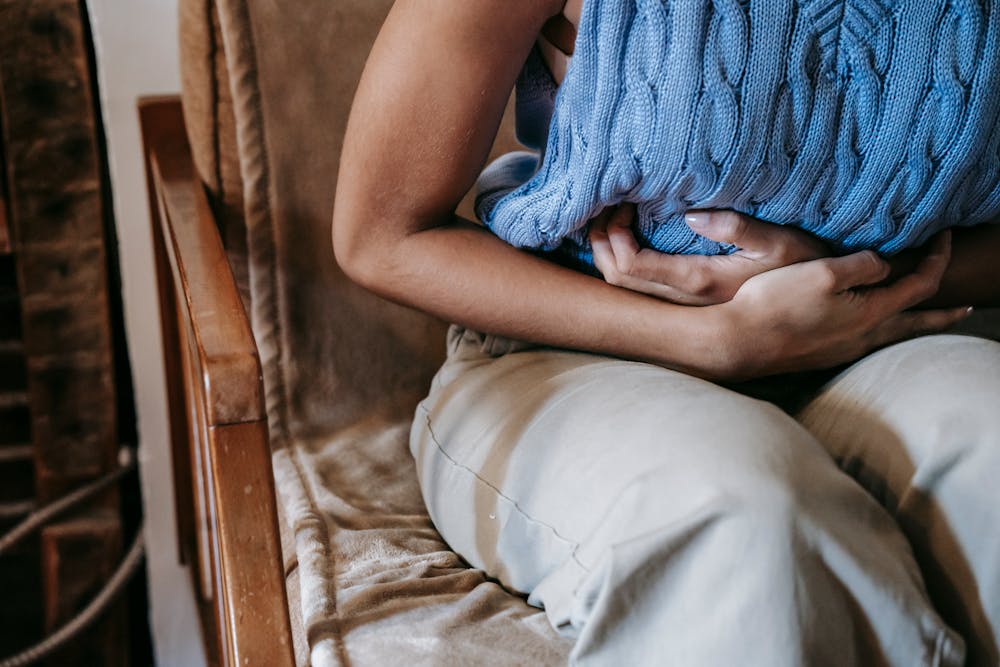
Gallstone pain is a critical warning sign that should never be ignored, as the stones can turn into life-threatening infections if left untreated.
As such, if you suspect that you may have gallstones, consider seeking a professional evaluation from a gallstones specialist, such as Dr. Thng. Early keyhole surgery by a gallbladder surgeon can help you prevent long term gallstone complications.
Contact Dr. Thng for a consultation today.
Want the full explanation? Watch Dr. Thng break down these concepts in detail on the original Every Body Knows episode on Mediacorp Channel 5.
Transcript
0:03 On tonight’s show, find out why bad eating habits and gallstones go hand in hand.
0:07 And we play “Jeopardy” to know which team is in danger.
0:18 They come in different sizes and colours and their formation can cause a considerable level of pain and discomfort.
0:24 They are hard pebble-like pieces of material, usually made of cholesterol, bile salts and bilirubin and found in the gallbladder.
0:31 Thank you for watching “Every Body Knows”.
0:33 I’m Catherine Robert, and you may already have a good inkling of what we’ll be talking about on the show.
0:38 That’s right. I’m Mike Kasem.
0:39 Joining us to share all we need to know about gallstones is Doctor Thng Yong Xian.
0:44 -Come on out! -Doctor, come on out!
0:46 -Hello! -There he is. Hello.
0:49 Great to have you here.
0:50 -Nice to meet you. -Nice to meet you too.
0:52 So nice to have you on the show.
0:53 -Welcome. -Grab a seat…
0:56 Okay, look, Dr Thng, stones can be formed in our kidneys, pancreas, prostate, and even salivary glands.
0:59 So how do gallstones come about?
1:05 Okay. Gallstones form when you have cholesterol coming from the liver.
1:11 It’s supposed to be kept dissolved in the bowel, but when there’s too much cholesterol, it actually crystallises and forms stones when it mixes with bacteria.
1:20 Okay.
1:21 So what are the four Fs?
1:23 I hear there are four Fs when it comes to gallstones.
1:26 What are they associated with?
1:28 Okay. Gallstones are associated with females.
1:32 -Females get it much more than males… -So unfair.
1:36 About two times more.
1:38 The fairer sex get it more, and those who are fair.
1:43 So Caucasians and Chinese tend to be more predisposed to getting gallstones.
1:48 Why?
1:49 -It’s more genetic. -Okay.
1:51 And it’s due to an increased cholesterol production from the liver.
1:55 -Okay. -The other thing is when they are over 40.
1:58 So age is also one of the predisposing factors.
2:03 The other factor is when they are fatter or more meaty.
2:08 -Okay. Sexier, more curves, curvaceous… -More curves…
2:12 -Voluptuous. -Yes, more curves.
2:14 -Thick. -So they’re more prone to…
2:16 Is that because there’s more cholesterol?
2:17 Yes, more cholesterol, and when there’s more cholesterol in the bowel, you could form stones.
2:22 What would you rather have, kidney stones or gallstones?
2:26 -I would rather have gallstones. -What a question.
2:28 I know good surgeons who can remove my gallbladder for me.
2:31 Right. Okay, so…
2:33 -It’s a different thing, right? -Yes.
2:34 I didn’t even understand that there’re two…
2:36 You can have stones in two different places.
2:37 Yes. The stones are divided based on the organ.
2:41 A kidney stone is present within the kidney, while a gallstone is present within the gallbladder.
2:47 With a gallstone, can you pass it out like you’d pass a kidney stone? If it’s small.
2:53 With gallstones, it’s better to have the gallstone within the gallbladder.
2:57 -I’m going to show you a diagram. -Okay, yes.
3:00 This is the gallbladder and there’s a cystic duct which is joined to the common bowel duct.
3:07 The stones can pass through the gallbladder, through the cystic duct and into the common bile duct.
3:13 The problem is that when it passes into the common bile duct, you can actually get infections because this duct gets blocked, the infection can travel upwards towards the liver.
3:24 So you can get liver abscesses, you can get inflammation of this entire bile duct.
3:30 It can also block the pancreatic duct and cause pancreatitis.
3:35 Would there be enough pain that you would know before all this happens?
3:39 Definitely. If one of these things happen, you’ll get fever, you’ll get jaundice, which means the yellowing of the eyes, you’ll have tea-coloured urine and severe upper right abdominal pain.
3:52 I’ve got a question. I’m perpetually on some kind of diet all the time.
3:56 And for women, our weight fluctuates, right?
3:59 Based on a little bit of reading that I was doing, does it have something to do with weight loss?
4:04 Crash diets, whereby you have sudden weight loss, leach the mobilisation of fat within the liver.
4:12 When you mobilise fat within the liver, it creates cholesterol.
4:16 This cholesterol then enters the bile duct.
4:19 When there’s too much cholesterol within the gallbladder, it actually crystallises to form stones.
4:25 And when it mixes with bacteria.
4:28 All right, okay. With that, the only person I can think of is our next guest.
4:35 All right, guys, this guy speaks all four of our official languages here.
4:38 He is a superstar.
4:40 And she’s a bubbly DJ on 987 whose love language is food, glorious food.
4:46 I love her cooking, by the way. She makes amazing stuff.
4:49 -Why didn’t she invite me? -No, because you’re not invited.
4:52 Okay, let’s welcome our two energetic guests, Das DD and Natasha Faisal!
4:56 -Come on out, guys! -Come on out!
4:57 -Hello! -Hello!
4:59 Hi, everybody!
5:01 The first thing I want to say to you, Natasha, is that you still owe me sambal goreng.
5:05 -Do I? -Yes. Let’s not say this in front of the doctor.
5:11 -Thank you. -All right, let’s have a seat.
5:13 Okay, guys, you were hearing some of our conversation backstage?
5:18 -Yes, we did… -We did.
5:20 But we were also having our own conversation backstage.
5:23 Okay…So now that you guys know what gallstones are…
5:26 -Here’s your test. -Have you had it?
5:27 -Have you ever had it? -My husband had it.
5:30 It was such a dramatic episode because he was on the floor, I had to call the ambulance, and he was wheeled away on a stretcher.
5:38 -I don’t know about you guys… -Did you cry?
5:40 I did. I was thinking… “Am I going to be a single mum?”
5:45 -That escalated quick. -I’ve a friend who was the same way, on the floor and in so much pain.
5:49 You imagined the worst-case scenario, right? Because we’ve been ignoring his symptoms and pain.
5:54 Good idea.
5:55 -No… -What?
5:56 We went to the GP and they dismissed it.
5:59 Okay.
6:00 And then it went on for a few months.
6:03 I guess he has a high pain threshold, but I couldn’t tell because whenever he has a regular cough and cold, he’s already under the covers.
6:10 So when he complained about the pain, I told him… “Play a game. You’re going to be okay after…”
6:13 What were the symptoms?
6:15 He said there was this sharp pain in the right side of his abdomen.
6:20 He was bloating like crazy.
6:23 It got so bad that he felt like he could not even breathe.
6:26 That’s when I thought, “You know what? Let’s call the ambulance now.”
6:28 -Then he was wheeled away… -Yes, go straight…Good idea.
6:30 It sounds very much like…
6:32 -the pain you would have when you… -Are in labour.
6:35 Your…
6:36 I don’t know what that pain is like, but the appendix…
6:38 -Yes. -Is it similar?
6:40 Okay, the thing about gallstones is that most gallstones are asymptomatic, meaning you don’t have symptoms.
6:47 So they can be there for a long time with no symptoms, but as the stones get bigger, you can develop symptoms.
6:55 As to why your husband started to experience pain initially, normally, it’s probably related to food.
7:00 After a heavy meal, the gallbladder will contract to help digest the fat that has entered the stomach and the small intestine.
7:09 But the stone is stuck in the duct, preventing the bile from coming out.
7:15 When the gallbladder squeezes against this stone, the pressure in the gallbladder increases.
7:21 Hence, he experiences pain.
7:23 So it all comes back to me.
7:25 It’s my fault because I cooked him the meal.
7:27 -You know… -It’s all your fault.
7:30 Guys, let me direct your attention to the table here.
7:32 We have ping pong balls, golf balls, stones, marbles and pebbles.
7:37 -If you had to pick one… -Yes.
7:39 Which would you pick?
7:40 -That represents a gallstone… -Right.
7:43 -most specifically. -I was going to go for the marbles… but maybe the pebbles.
7:47 -Okay, so it’s between these two. -Between these two, yes.
7:49 You picked the marbles because you wanted him to play with…
7:54 No, because I saw the sample.
7:56 -You saw the sample? That’s cheating. -Yes.
7:58 No, but the sample was already broken up, so it became the size of the marble.
8:01 -Okay. -Das, which one do you think it is? -I think it’s this one.
8:04 -One of those… -So small.
8:05 -I don’t think so. -No, I feel like….
8:07 How can that cause pain?
8:09 Maybe the bile requires very little space to…
8:12 Well, let’s take it over to our doctor.
8:14 -Do any of them have it right? -I hope I win.
8:15 Both of them got it right.
8:17 The stones come in all shapes and sizes.
8:19 You can have small stones and you can have large stones, but different sizes of stones cause different problems.
8:25 How big can the largest stone get?
8:27 The largest stone that I had taken out was probably about the size of a quail egg.
8:34 -Quail egg? -Yes, about 3 to 4 centimetres.
8:36 -A little smaller than… -That’s a quail egg.
8:38 -About this size. -Yes, about this size.
8:40 -That’s big. -Yes, that’s big.
8:42 When you have big stones, the stones get lodged in the gallbladder.
8:47 And if you ignore the symptoms, what happens is you get a gallbladder infection.
8:53 But if you have small stones, the problem with small stones is that they can actually pass through the cystic duct into the bowel duct, and that causes other problems like pancreatitis.
9:04 It causes cholangitis or liver abscess.
9:08 Yes. So it’s not that it’s good if you have a small stone, it can cause different problems.
9:13 If you get pancreatitis, you have it, can they fix that?
9:17 It depends. Once you get pancreatitis, the treatment is mainly supportive and the severity is on a spectrum.
9:25 The ones who have severe pancreatitis have to be managed in the intensive care unit, and potentially, it’s life-threatening, but you could have very mild pancreatitis with some severe pain that goes away within two to three days.
9:40 But the treatment for that would be to remove the inciting cause.
9:45 If it’s due to gallstones, then you should remove the gallbladder.
9:50 All right, we’re going to go for a short break right now.
9:52 When we come back, find out how a 60-year-old businessman gets into shape after having his gallstones removed.
9:59 Don’t go anywhere.
10:13 Welcome back to “Every Body Knows”.
10:14 When his body kept sending him clear signals to seriously examine his lifestyle and his diet, this young senior knew he could not wait it out any longer and had to make a drastic yet essential change.
10:26 From an accidental discovery that he had gallstones to taking decisive action in exercising and losing weight, Low Liang Thai’s transformation from fat to fab is truly inspiring.
10:39 The gallstones that were removed from my body looked like golf balls.
10:44 Fit and athletic-looking, it’s hard to imagine that 60-year-old Low Liang Thai was once big, heavy and unhealthy.
10:52 He now exercises regularly with his wife, runs six to seven kilometres daily, and watches his diet with hawk-eyed scrutiny.
11:01 I was as heavy as 105 kilogrammes, I was wearing pants that went up to waist size 44.
11:05 I never really thought about how I looked.
11:08 I was just living life day by day.
11:10 At the same time, I felt a lot of exhaustion when I worked.
11:13 After eating a meal, I felt very lethargic.
11:18 At some point, I started to feel that my problems such as injuries, back pain, gastric issues, were getting from bad to worse.
11:26 It came with extreme pain, discomfort, sleepless nights, it interfered with my work and my rest.
11:35 At an extreme, there were two incidents where I had a severe gastric attack that landed me in the hospital ICU.
11:44 I stayed in the ICU for a couple of days.
11:47 That started the thinking process, I realised I need to have good health in order to go forward with the rest of my life.
11:54 The doctor was constantly recommending that I lose weight.
12:00 It’d take some pressure off my back, I had slipped disc before.
12:04 It’d take some pressure off my tummy, so that I wouldn’t get gastric pain.
12:12 Basically, it’s about reducing weight.
12:13 The doctor said a lot of problems would then go away.
12:16 So I went to see a dietitian.
12:18 Again, we didn’t get into too much.
12:20 The whole idea is about a calorie deficit.
12:23 It’s all about how much you eat and how much you burn.
12:26 I was eating about 1005 calories a day and then I had to burn calories as well.
12:34 So my wife and I decided, “Okay, let’s do a marathon.”
12:37 That took us a while to train up for it.
12:38 There was an objective to pursue.
12:41 It kind of kept the exercise going, so it was not so monotonous.
12:46 It was very challenging. At the same time, there was the diet.
12:48 Those two came together.
12:50 I lost weight very quickly.
12:53 I think it was within a year, six months to a year, that I lost quite a lot of weight.
13:00 Without knowledge of proper training and coaching, I just kept running and running, until one day, I sustained an injury.
13:10 When you sustain an injury, you suffer downtime.
13:14 And when you suffer downtime, you can’t exercise.
13:17 You start to see your weight go back up.
13:19 Everything starts to fall apart slowly.
13:21 As I was aging, my blood pressure started to climb.
13:26 I had cholesterol problems.
13:27 I started taking medications and that came with some potential side effects.
13:33 So we did the blood test, we did the urine test, we did the ultrasound.
13:37 One day, they found that there was a cyst on my liver.
13:41 So I had to do an MRI.
13:44 And when we did that, the gallstone was found.
13:47 But ultimately, we decided that if I was in good health, and the gallstone was not going to get smaller, it was going to get bigger, it’s just as well that we made the decision to take it out.
13:58 Now that I’ve removed my gallstone, all the problems of gastric and pain have gone away.
14:04 I have a transformed body with the weight loss.
14:07 I’m looking forward to the journey ahead, living a healthy lifestyle with friends and family, eating healthy, living well. Play well.
14:17 -What a story. -Yes.
14:19 Doctor Thng, when Mr Low first came to you, what was his general health like?
14:24 When he first came to me, he had already lost some weight.
14:28 When you lose weight quite quickly, the liver uses up a lot of fat within the liver and it leads to more cholesterol and formation of stones.
14:37 He had large stones.
14:39 They were about 2 to 3 centimetres in size.
14:42 Because of his symptoms and it was affecting his quality of life, we recommended surgery to him.
14:49 In my husband’s case, he did go through the surgery, but he did not remove the entire gallbladder.
14:56 So he still has a gallbladder.
14:57 Now that we’re changing our diet, does it mean that he’s still very prone to getting stones again?
15:05 Ideally, we should remove the whole gallbladder because if you leave…
15:10 The gallbladder is already dysfunctional.
15:13 If you leave it there, even if you leave part of it there, potentially, new stones could form.
15:19 And that’s something we don’t want.
15:21 Ideally, the surgical option would be to remove the gallbladder in its entirety.
15:28 In medical terms, we call this a laparoscopic cholecystectomy.
15:34 Cholecystectomy means gallbladder.
15:36 Laparoscopic means it’s done in a minimally invasive way.
15:39 We put a camera port in the umbilicus…
15:41 Is that the image of it?
15:44 Yes. This is the image of the gallbladder that is still attached to the liver.
15:49 And on the next slide, the cystic duct that joins the gallbladder to the common bowel duct is clearly dissected out.
15:56 -That’s the structure that’s closer to us. -Okay.
15:59 The structure away from us is the blood supply to the gallbladder.
16:03 That’s called the cystic artery.
16:04 On the next slide, you’ll see that we have actually clipped off the cystic artery.
16:11 The next thing we need to do is clip off this cystic duct.
16:15 You can see that the cystic duct is also being clipped off.
16:19 It’s not very pretty.
16:20 Those are like zip ties, right? Or no?
16:22 -These are small clips… -Yes.
16:25 that have a lock at the end of it.
16:27 -It’s to keep the cystic duct shut. -Okay.
16:30 The problem is if these clips don’t work, you’ll have bowel leaking out through the common bowel duct.
16:37 -That’s infection… -Yes, that’s infection and complication.
16:41 All right, guys, we’re going to go for a commercial break.
16:43 There’s a lot more that Doctor Thng will be sharing with us about gallstones… right after the break. Stay with us.
17:00 It’s not always easy to say no to good food and yummy treats, but we need to constantly remind ourselves that moderate consumption is one of the keys to maintaining good health.
17:09 That’s right. And Mike, do you know what types of food we should stay away from if we want to prevent gallstones?
17:15 Why don’t we find out from Doctor Thng, together with Das and Natasha?
17:21 Just FYI, by the way, we have some pictures that we are supposed to stick on the board.
17:26 It’s with different types of foods.
17:29 The girls are going to win, right? You can already tell, I’m sure.
17:32 Three, two, one, go!
17:35 -Peanuts. I think it’s good. -Avocado…
17:37 -I’m just going to start sticking. -Yes, because you know what’s up…
17:40 -Avocado oil, like the avocado itself… -Yes.
17:42 -Coconut is good. -That’s good.
17:44 -And strawberries… -But coconut is creamy.
17:47 But I’m sure that fried chicken is not.
17:49 -Yes, it’s definitely bad. -It’s the cholesterol…
17:51 Yes, I think alcohol is definitely bad.
17:53 None of us here consume alcohol.
17:54 A baked potato.
17:56 Very high in carbohydrates.
17:59 Okay, we’re done!
18:00 You have some in the middle?
18:01 -Yes, because… -It’s good and bad.
18:03 You’re so wrong on sardines. They’re really good for you.
18:06 That’s why it’s in the middle.
18:08 Yes, because it’s good. But sardine oil is bad.
18:11 -Sardines… -The oil in the sardines is good for you!
18:13 -Doctor, what do you think? -HDL. It’s not…
18:15 -You don’t have to worry. It’s HDL. -Okay, let me take a look…
18:18 Okay.
18:20 I think the ladies have done brilliantly.
18:21 Thank you. Say it louder.
18:24 Normally, highly processed food, alcohol and deep-fried food tend to be bad because they create a lot of cholesterol and saturated fat.
18:35 Wait, my baked potato is in the middle.
18:37 Okay, to be honest, baked potatoes can be good.
18:41 -But when you add butter… -Yes, it’s how you prepare them.
18:44 That’s why it’s in the middle.
18:46 All right, here’s what we have, you see, we were clear.
18:48 We didn’t do anything in the middle. We were clear.
18:49 We have good, we have bad, we don’t have “okay”.
18:51 The guys have also done wonderfully.
18:54 The only thing would be the baked potato.
18:56 Of course, it really depends on how it’s prepared.
18:59 So I would declare both teams winners.
19:02 -No… -Yes!
19:04 All right, listen, I’m going to come back over here.
19:06 Cat, why don’t you come back over here with me?
19:08 Listen, guys, from one game of separating the good from the not-so-good, we’re now going to take on another challenge.
19:16 My goodness. Guess what?
19:17 We’ll be playing “Jeopardy” and there’ll be a total of three categories.
19:20 They’re all related to gallstones, obviously.
19:23 And I’m going to team up with Das for this game.
19:26 That means it’s boys against girls again.
19:29 Gallstones 101 for 10.
19:31 The gallstones can be made of two main substances, cholesterol and this compound formed from the breakdown of red blood cells.
19:39 -Fat! What is fat? -Really?
19:43 What is fat? Is that correct?
19:44 The other thing that gallstones can be formed from…
19:47 These are actually called pigment stones.
19:50 When the red blood cell gets broken down, it releases heme and bilirubin and forms pigment stones.
19:56 -Okay, so… -Did you know that?
19:58 -Yes, I did. -Of course we knew it was bilirubin.
20:00 What do you want to go with? Causes and Risk Factors?
20:02 Yes. I think I’m an expert in that.
20:04 For 5.
20:05 This gender is more likely to develop gallstones due to hormonal influences.
20:10 What is female?
20:11 -What is female? -Good job, guys.
20:15 -Okay, let’s do… -Yes, we have all day.
20:17 -For 5. -Yes.
20:19 -Gallstones 101. -Okay.
20:21 The substance responsible for breaking down fats, produced by the liver and stored in the gallbladder.
20:26 -Why is this 5? -I know the answer to this!
20:29 Wait, what is cholesterol?
20:31 -We’re talking about… -No, wait, bile.
20:33 -You’re right. -Yes!
20:35 I think you overheard my answer.
20:37 All right, next one.
20:38 Symptoms and Treatments for 20.
20:43 A non-invasive surgical method used to remove the gallbladder.
20:46 Keyhole surgery.
20:47 What is keyhole surgery?
20:49 -ERCP, what is… -What is laparoscopy?
20:53 -Definitely. -Yes!
20:57 For 10, Causes and Risk Factors.
20:58 -Okay, yes, let’s do it. -For 10. Causes and Risk Factors.
21:02 A high intake of this type of fat, found in fast food, increases the risk of gallstones.
21:08 -I feel like we spoke about this, we did. -Compound fat.
21:13 Close…
21:14 What is saturated fat?
21:17 Okay, saturated fat has a lot of cholesterol.
21:22 When you consume a lot of saturated fat, it actually leads to a lot of cholesterol within the gallbladder and hence, gallstones.
21:29 -Does it also lead to 10 points? -So you got it correct.
21:32 -Yes, definitely. -You’re welcome.
21:33 You’re welcome for giving you that.
21:35 -That was your charity for the year. -Yes.
21:36 This is giving me high blood pressure.
21:38 Let’s move back to the main board.
21:40 -I don’t know what’s going to come up. -We’re going to go…
21:41 Causes and Risk Factors. 20 points.
21:44 This condition, where the pancreas becomes inflamed, can result from a gallstone blocking the bile duct.
21:48 Okay, the gallstone travels down that little highway…
21:52 -Pancreas. What is pancreatitis? -Pancreatitis!
21:54 -Pancreatitis. What is pancreatitis? -What is pancreatitis?
21:57 Correct, guys.
21:58 -You guys have been listening. -Yes.
22:00 Natasha was twiddling her thumbs just now, not listening.
22:03 Not at all. I was thinking of my husband.
22:06 Yes. How many points did we get?
22:07 You guys have 15 points.
22:09 -15. -A whopping 15 points.
22:11 That’s a lot, more than zero.
22:13 -45 to 15. -Yes.
22:14 Symptoms, for 5 and 10.
22:15 So we’re going Gallstones 101, for 20.
22:18 Ladies and gents.
22:20 -Let’s see the question. -Let’s go.
22:21 This term refers to the surgical removal of the gallbladder.
22:26 -Colex… -What is…
22:28 What is colexotomy?
22:32 -It’s a cholecystectomy. -Cholecystectomy.
22:34 -We’ll give that to you. -We’ll give that to you.
22:37 -Thank you. -I think that’s good enough, guys.
22:39 -I think that’s good. -That was fantastic.
22:42 But what did you say? Colonoscopy?
22:44 No, the thing is, even with it on the screen, I don’t know how to pronounce this.
22:48 All right, good job, guys. But we did win 45 to 35.
22:52 Doctor, thank you so much for being with us.
22:53 It was so much fun.
22:54 I hope you’ve enjoyed watching our show and learned a lot about the causes, preventions and treatments available for gallstones.
23:01 That’s right, remember to join us next week on “Every Body Knows”.
23:04 In the meantime, take care. Bye-bye!
23:35 Captions: Gayle Mak, Mediacorp Pte Ltd