
Pancreatic Cancer and the Whipple Procedure: Inside OT Episode 6
Featured Programme: Inside OT
Featured Surgeon: Dr Thng Yongxian
Episode: Episode 6
Hospital: National University Health System
Focus: Pancreatic Cancer and Whipple (pancreaticoduodenectomy) Surgery
Date of Publication: 5 Dec 2022
Inside OT is a brand-new reality-doc series that takes viewers right into the heart of operating theatres in Singapore, capturing the intensity, tension and happenings within. In episode 6, a woman diagnosed with pancreatic cancer has to decide whether she should undergo a 7-hour-long operation to remove her affected organs.
Dr Thng Yongxian speaks about pancreatic cancer and the Whipple procedure in this episode. Below, we recap the essential takeaways from his interview, covering what pancreatic cancer is, why it’s challenging, and how the Whipple procedure works.
Understanding Pancreatic Cancer
Pancreatic cancer develops when cells in the pancreas begin to grow uncontrollably, forming a malignant tumour. In Singapore, it remains relatively rare, yet its incidence has been gradually rising since 2000 up to 2023, according to the Singapore Cancer Registry Annual Report.
Detecting it early is particularly challenging. Nestled deep within the abdomen, the pancreas allows small tumours to grow quietly, often without causing noticeable symptoms. This hidden nature means that many cases are only identified once the disease has advanced, making timely intervention more difficult.
During the episode, Dr Thng highlighted some of the key pancreatic cancer symptoms that patients might notice, even if they are subtle:
- Jaundice: Yellowing of the eyes or skin due to bile duct obstruction.
- Persistent diarrhoea: Ongoing digestive disturbances caused by pancreatic enzyme deficiencies.
- Ongoing abdominal discomfort: Mild, vague pain in the upper abdomen that may radiate to the back.
Because these symptoms can be easily overlooked or mistaken for less serious conditions, Dr Thng emphasised the importance of paying attention to persistent changes in digestion or skin colour, seeking medical evaluation promptly, and discussing appropriate pancreatic cancer screening when risk factors are present.
Why Pancreatic Cancer Treatment Is Medically Challenging
Pancreatic cancer in Singapore presents unique challenges for both detection and treatment. Key factors that contribute to these challenges include:
- Deep Location in the Abdomen: The pancreas is tucked behind the stomach, making it difficult to access and examine.
- Proximity to Major Blood Vessels: Pancreatic surgeons in Singapore must carefully avoid critical arteries and veins that supply the liver, stomach, and intestines.
- Adjacent Organs: The bile duct, stomach, and intestines lie close to the pancreas, increasing the risk of complications during surgery.
- Technical Complexity of Surgery: Removing cancerous tissue while preserving surrounding structures requires exceptional precision for the best possible outcomes.
- Need for Thorough Evaluation: Imaging, lab tests, and multidisciplinary assessments are essential before deciding on pancreatic cancer surgery.
What Is the Whipple Procedure?
The Whipple procedure, also known as a pancreaticoduodenectomy, is a complex surgery performed to treat pancreatic cancer by removing affected tissue while preserving as much healthy function as possible.
It is most commonly performed for tumours located in the head of the pancreas, where obstruction of the bile duct or digestive complications often occur.
An Overview of the Operation
During the Whipple procedure, several structures may be removed to ensure complete excision of the cancerous tissue:
- Head of the Pancreas: The most common site for tumours
- Duodenum: The first segment of the small intestine
- Bile Duct: Which carries bile from the liver to the intestines
- Gallbladder: Often removed to prevent postoperative complications
- Sometimes Part of the Stomach: Depending on the tumour’s location
This combination of organ removal allows pancreatic surgeons in Singapore to address the cancer effectively while maintaining the best possible outcome for digestive and metabolic function.
Why Pancreatic Cancer Surgery Takes Many Hours
The Whipple procedure is time-intensive, often lasting seven to eight hours, due to the need to carefully remove and then reconstruct multiple structures. Key components of this reconstruction include:
- Digestive Tract: Reconnecting the remaining stomach and intestines
- Bile Duct: To restore bile flow from the liver
- Pancreatic Duct: Reconnecting this tiny duct is especially challenging due to its small size and delicate tissue.
Inside the Operating Theatre: Surgical Considerations
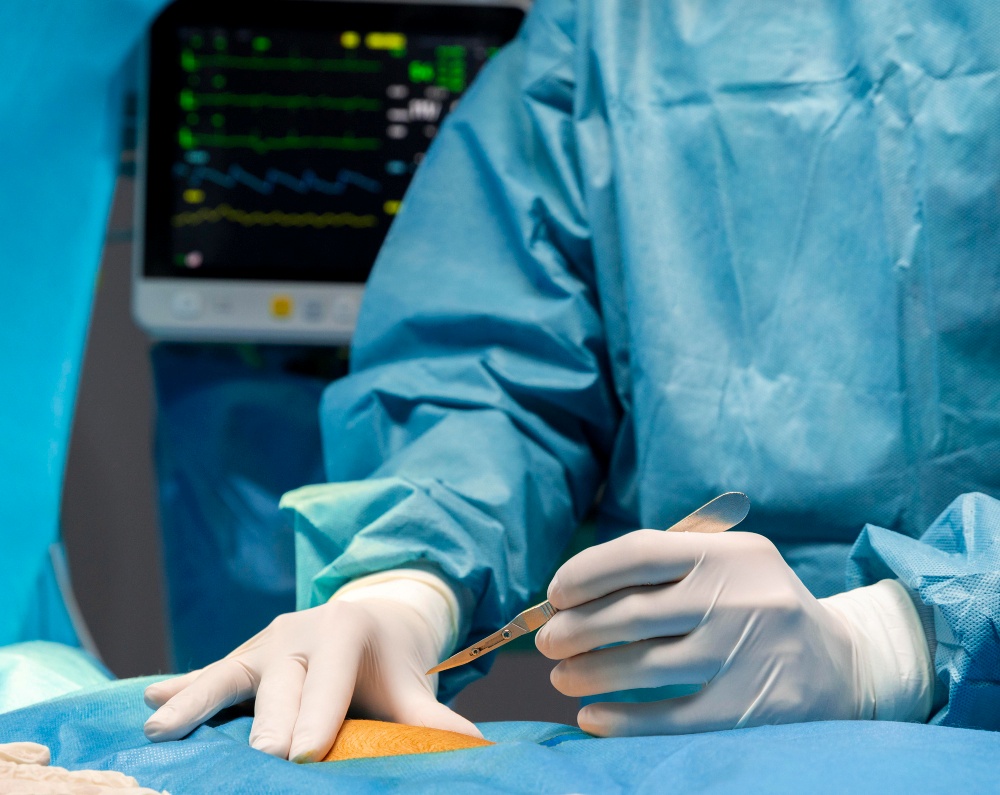
The Whipple procedure is one of the most complex operations in abdominal surgery, and the episode offered viewers a close-up look at what this entails. The surgery typically lasts around seven to eight hours, requiring sustained focus and careful coordination from the entire surgical team.
Several key risks must be managed throughout the operation:
- Bleeding: The pancreas is surrounded by dense networks of blood vessels, making even minor cuts potentially serious.
- Leaks at reconnection sites: Reconnecting the digestive tract, bile duct, and pancreatic duct carries a risk of leaks, which can lead to complications if not promptly addressed.
- Postoperative inflammation or infection: Any major surgery can trigger inflammatory responses or infections, making vigilance essential during and after the operation.
Every step of the surgery requires careful precision and timing. Even small mistakes can have serious consequences.
Recovery After a Whipple Procedure
Recovery after a Whipple procedure requires careful attention and close monitoring. Because the surgery involves multiple organ reconnections, doctors and nurses watch for potential complications such as infections, leaks, or inflammation, which need prompt management if they arise.
The episode highlighted that, with meticulous care, positive outcomes are possible. In this case, the patient’s surgery was successful, allowing for hospital discharge within a few days. Over time, she gradually returned to her normal daily activities and work, demonstrating that, while demanding, recovery is achievable with proper support and follow-up.
The Human Side of Major Cancer Surgery
Undergoing major cancer surgery is as much an emotional journey as it is a physical one. Patients with pancreatic cancer often grapple with the fear of long, complex operations and anxiety about how their bodies will recover or whether the procedure will be successful. Family support plays a crucial role, providing reassurance and helping patients navigate the uncertainty.
Clear communication and guidance from the pancreatic cancer specialist and the entire medical team in Singapore are equally important. Understanding what to expect before, during, and after surgery helps patients feel more confident and supported, making the process less overwhelming and fostering better outcomes both emotionally and physically.
Key Takeaways from Inside OT Episode 6
Episode 6 of Inside OT highlights the complexities of pancreatic cancer and its treatment. Key points include:
- Pancreatic cancer often presents with subtle, non-specific symptoms that can be easily overlooked.
- Persistent symptoms, such as jaundice, abdominal discomfort, or digestive changes, should prompt medical evaluation.
- The Whipple procedure is a highly complex surgery, but in carefully selected cases, it can offer meaningful benefits.
- With meticulous surgical care and close follow-up, recovery is possible, allowing patients to gradually return to daily life.
These takeaways underscore the importance of awareness, timely diagnosis, and coordinated care for both patients and their families.
Watch the Full Episode
For a closer look at pancreatic cancer surgery and the realities inside the operating theatre, watch the full Inside OT Episode 6. See firsthand how complex procedures like the Whipple operation are performed, and gain deeper insight into the patient experience and surgical decision-making.
Catch the full interview and hear Dr Thng explain pancreatic cancer and the Whipple procedure in detail on Inside OT Episode 6.
If you’re concerned about your pancreas health or risk factors for pancreatic disease, consider booking a consultation and screening with Dr Thng Yongxian for professional guidance and peace of mind.
Transcript
0:06 Wait, don’t move
0:08 This operation will take about six to seven hours
0:11 It’s quite a difficult operation
0:13 Take it slow
0:17 I often get stomachaches
0:19 Sometimes, I’ll get dizzy and vomit
0:23 The worry now is that…
0:24 your calcium levels may fall…
0:27 because now, your bones are very hungry
0:29 Patient’s 12th
0:30 She had an inflamed pancreas previously,
0:33 which resulted in a lot of internal scars
0:37 What if I don’t survive the surgery?
0:40 Whether my body withstand…
0:41 the long and major surgery?
1:03 (Ng Teng Fong General Hospital)
1:07 Ng Teng Fong General Hospital, which was opened in 2015,
1:11 covers an area of about 55,000 square metres
1:14 It has an emergency department, internal medicine department,
1:17 hepatobiliary and pancreatic surgery department and so on,
1:19 alleviating the strong demand for medical treatment in the West
1:24 No close contact
1:25 No
1:26 Tan Mei Ping, 50 years old,
1:28 is at Ng Teng Fong General Hospital today for an operation
1:33 She is independent and didn’t want to trouble her family,
1:36 so she came to the hospital to settle the admission procedures on her own
1:40 I often had stomach issues
1:44 Every time I went to consult the neighbourhood doctor…
1:47 and the company doctor,
1:49 they all said I had gastric
1:53 So, I thought that the gastric could be due to stress from work,
1:58 or from being too busy
2:03 Is it a bit low?
2:04 No
2:04 (Blood pressure) 146/96
2:08 Tan Mei Ping is a sales trainer,
2:11 She has always loved outdoor activities
2:13 From time to time, she would go out with relatives and friends,
2:15 or cycle around the island together
2:17 She is also a frequent marathon runner
2:20 Through her company’s annual medical check-up,
2:22 she only recently discovered that what she suffers from…
2:25 is not ordinary gastric pain
2:27 She actually suffers from what is known as…
2:30 primary hyperparathyroidism
2:36 It is the most common cause of hypercalcemia
2:42 Why does she have this issue?
2:44 That’s because in her neck,
2:46 there is a parathyroid tumour on the lower right side
2:53 (In Singapore, thyroid cancer is the eighth most common cancer among women)
2:58 (Between 2015 and 2019,)
2:59 (an average of 312 women in Singapore were diagnosed with thyroid disease per year)
3:06 Normally, parathyroid glands can’t be seen
3:10 We can’t even see them through an ultrasound scan…
3:13 because they are really small
3:14 They are smaller than a grain of rice
3:16 Usually, one of them may start to swell and become a tumour,
3:22 causing hormone hyperactivity
3:26 Too much parathyroid hormone can lead to high levels of calcium in the blood
3:32 Hypercalcemia could be life-threatening
3:36 So, in the long run, if we don’t resolve hyperparathyroidism,
3:43 the bones will become more and more porous
3:46 The probability of fracture would be higher
3:50 Also,
3:51 we know that long-term hypercalcemia affects other parts of the body
3:57 She may experience heart problems
4:00 Before this, I didn’t know why I always had stomach pain…
4:04 and backaches
4:06 I would go to TCM doctors for cupping…
4:11 and acupuncture
4:13 I also didn’t know why I kept feeling dizzy and vomiting
4:16 I wasn’t able to sleep after midnight
4:20 I would only be able to sleep for two to three hours
4:27 The scar will be very small
4:29 It would be somewhere along your neck here
4:31 Would it be big? Here?
4:34 It’ll be a small scar
4:36 The patient had gastric ulcers 10 years ago,
4:39 which could have been due to hypercalcemia
4:41 Some patients may also feel easily fatigued
4:45 These are very common symptoms
4:48 For long-term symptoms, hypercalcemia could lead to osteoporosis
4:52 This patient had a slight fall two years ago,
4:56 which caused a fracture in her foot
5:06 Also awaiting surgery in the hospital this day…
5:09 is 56-year-old Rosna, who suffers from pancreatic cancer
5:14 Okay, it’s better
5:15 37.1
5:17 Accompanied by her husband, she was admitted to the hospital…
5:20 for a seven-hour Whipple operation
5:28 Apparently, the ship is not anchored…
5:30 in the uncertain sea
5:32 Rosna is an English teacher…
5:34 and has a history of hypertension, hyperlipidemia and diabetes
5:40 She has been using medication to keep these conditions under control
5:44 But this time, the symptoms were unexpected
5:48 I noticed that the white of my eyes…
5:50 were turning yellow
5:51 But again, I didn’t visit the doctor
5:55 And I had diarrhoea for two weeks straight
5:59 I still didn’t see the doctor
6:01 I self-medicated
6:03 I tried to take charcoal pills…
6:05 and stuff like that
6:07 I know it’s wrong of me
6:09 I was being stubborn…
6:10 and sticking to my own medication
6:13 Then, I came to a point…
6:15 when I told myself that this cannot be
6:17 Because my eyes were turning yellow
6:19 And my diarrhoea kept recurring
6:22 It came to a point where my son…
6:24 encouraged me to see a doctor
6:29 So, I went, and I was warded that very day
6:33 After many checks,
6:38 X-rays, CT scans and an endoscopy,
6:42 the doctors found out that…
6:43 there were problems with my pancreas
6:47 Okay, breathe in, breathe out
6:50 Breathe in, breathe out. Slow, deep breaths
6:55 The scan showed that there was a blockage in the bile duct
6:58 The main reason for this bile duct blockage is because she has pancreatic cancer,
7:03 which blocked the bile duct
7:05 So, we did other scans first to make sure that the cancer hasn’t spread
7:10 Then, we arranged for a surgery
7:12 (Pancreatic cancer has the 7th-highest cancer mortality rate globally,)
7:16 (and ranks 5th in Singapore)
7:19 (Pancreatic cancer is more common among males,)
7:22 (with patients averaging 71 years old and above)
7:28 Pancreatic cancer is one of the most difficult cancers to cure
7:33 But for early pancreatic cancer,
7:35 if the pancreas is removed surgically,
7:38 and the surrounding lymph glands are cleared,
7:40 the survival rate of the patient can be improved
7:44 The first thing that came to my mind…
7:47 when I was told…
7:48 that I had to go through this surgery was…
7:50 Obviously, I was scared and anxious
7:54 Because I’ve never gone through this before
7:58 A lot of things were going through my mind
8:01 All the negative feelings and thoughts,
8:04 like, what if I don’t survive the surgery?
8:07 Whether my body can withstand…
8:09 the long and major surgery?
8:12 I want everything to go well
8:14 I just want to wake up alive…
8:17 after the operation
8:19 In the face of his wife’s worries,
8:21 Rosli, as a husband,
8:22 felt that the best solution was to be by her side
8:27 She’s actually just a bit scared and nervous
8:31 But as a family, we always encourage her,
8:33 and tell her not to worry,
8:34 because all of the doctors are professionals
8:37 They will take care of you
8:49 (Ng Teng Fong General Hospital)
8:54 Nurse, open the ligature
8:57 Rosna, who suffers from pancreatic cancer,
8:59 is at Ng Teng Fong General Hospital today for a Whipple operation
9:04 Can I have the power clip, please?
9:06 After Rosna received general anaesthesia,
9:08 the doctors immediately began the operation, which was expected to last up to seven hours
9:14 The Whipple operation is an extremely complex operation…
9:18 because the pancreas is located in the deepest part of the abdominal cavity
9:23 It is located behind the stomach…
9:26 and in front of the aorta and spinal cord
9:30 Rosna’s tumour is near the head of the pancreas,
9:33 which caused her to have jaundice
9:39 Retractor
9:41 After removing the pancreas,
9:43 many other parts need to be connected, so it takes a long time
9:48 In the final part of the operation,
9:50 Dr Thng must reconnect the small intestine…
9:53 with the remaining pancreas, stomach and bile duct
9:57 This makes the surgery even more complicated
10:01 Wait, don’t move
10:08 Another pair of forceps for Dr Joel, please
10:10 In the other theatre,
10:11 Tan Mei Ping,
10:13 who was diagnosed with primary hyperparathyroidism two weeks ago,
10:18 is about to start surgery after receiving general anaesthesia
10:22 We usually use two scans…
10:26 to detect which parathyroid gland has a tumour
10:30 The first scan is the ultrasound
10:32 The ultrasound will show…
10:34 which of these four parathyroids are swollen,
10:37 Normal parathyroid glands…
10:40 can’t be seen on the ultrasound…
10:41 as they’re less than one centimetre
10:43 The second scan is what we call Sestamibi or Parathyroid scan
10:48 This scan shows which parathyroid gland is hyperfunctioning
10:54 For this patient, both scans show that…
10:56 she only has one tumour, in the bottom right
10:59 This allows us to do a smaller and less invasive surgery
11:06 3-0 tie
11:07 Dr Oh performed an open surgery on Tan
11:12 He first made a small incision of about two centimetres…
11:16 in the low curved collar on the sternal notch,
11:19 and removed the parathyroid glands with manual retractors…
11:22 and the help of a headlamp
11:25 Most cases of thyroiditis are quite small
11:28 So, we want to make sure that we’re able to locate the tumour and remove it
11:35 We need to get to the plain…
11:36 between the thyroid and the parathyroid
11:40 The advantages of this type of operation is that the operation distance is short,
11:43 the operation time is short,
11:45 and the area that could be damaged is relatively small
11:49 In addition, the incision marks can easily be covered up after the operation
11:55 However, such an operation also presents certain challenges
11:59 For this surgery, the scar won’t exceed two centimetres
12:03 So, as you can imagine, a small scar…
12:06 would mean that we have to be more careful and use smaller tools…
12:11 to remove the tumour
12:19 (Two hours into the Whipple operation)
12:22 Give me the medium clip
12:24 I’ll need two
12:26 Rosna’s surgery has been going on for two hours
12:30 One more clip
12:31 In the 1960s and 1970s,
12:33 the mortality rate for such complex operations was 33 percent
12:38 However, with the rapid development of medical research,
12:40 the mortality rate for this operation has been reduced to about 2 to 3 percent
12:46 Take your time
12:51 Patient’s 12th
12:55 The biggest risk of this surgery is bleeding
12:59 When a patient bleeds, we can usually stop the bleeding in the operation theatre
13:04 The second risk is at the connection sites
13:07 Sometimes, if the patient isn’t able to heal well,
13:12 there may be signs of a leak
13:14 This would cause the patient to show signs of inflammation…
13:19 and to develop a fever
13:21 Their white blood cell count would rise, and they would need antibiotics
13:25 New tubes may need to be inserted to remove the dirty fluids,
13:29 or another surgery may be required
13:45 (Ng Teng Fong General Hospital)
13:48 It’s actually bigger than what we saw…
13:50 on the ultrasound
13:52 Tan’s operation has been going on for an hour and a half
13:57 Dr Oh Han Boon is carefully removing her parathyroid gland
14:03 During the operation, Dr Oh was most worried about…
14:06 accidentally injuring the recurrent laryngeal nerve
14:09 This would cause the patient to lose the ability to breathe normally
14:13 It will be difficult to live a normal life even if salvaged
14:18 The patient has quite a lot of symptoms
14:20 But she is also worried that the surgery would affect her quality of life
14:27 Her job requires her to use her voice to communicate with many people
14:33 Hence, we have to ensure the safety of the operation
14:36 We also hope to reduce the risk of damage to her voice and vocal cords
14:43 She felt that the symptoms were affecting her very much
14:46 Hence, we hope that her symptoms will start to disappear after the surgery
14:51 Her bones would also be stronger, so she might be able to…
14:56 do activities such as mountain climbing and so on
15:01 How high was the pre-excision?
15:03 Two hours later, Dr Oh successfully removed Tan’s parathyroid
15:09 After removing it, we can see that…
15:12 the tumour is bigger than what we saw from the ultrasound
15:16 That could also explain…
15:18 why the parathyroid hormone levels were so high before the surgery
15:22 Okay, the blood has been taken
15:24 We can take a look at it
15:26 Forceps, please
15:27 When we tested the blood…
15:29 in about 10 minutes after the gland was removed,
15:32 her index levels were already returning to normal
15:36 It was down to about 10, 12
15:53 Your voice is very good
15:55 The operation went very well
15:57 The scar is very small
16:00 After we took out the tumour,
16:03 the parathyroid hormone levels dropped a lot
16:07 It’s almost normal now
16:08 Now, the worry is that…
16:09 your calcium levels may fall…
16:13 because now, your bones are very hungry
16:15 They are trying to suck all the calcium back
16:18 We may give you some calcium pills
16:21 If everything goes well,
16:22 you can go back tomorrow
16:26 After this, you can eat and drink…
16:27 anything you want
16:29 Thank you, doctor
16:30 No problem
16:32 I will see you tomorrow morning
16:34 Okay, bye-bye
16:42 5-0
16:45 No, new line
16:47 (Four hours into the Whipple operation)
16:49 Forceps
16:50 Rosna, who suffers from pancreatic cancer,
16:52 is still undergoing surgery on the operating table
16:55 In addition to resecting the head of the pancreas, where the tumour is located,
16:59 Dr Thng also has to resect the duodenum surrounding the head and neck of the pancreas
17:05 T Breaker
17:06 The difficulty is that…
17:07 the duodenum is connected to the stomach and the small intestine
17:10 In the process of removing the duodenum,
17:13 a part of the stomach often has to be removed as well
17:16 The end of the bile duct…
17:18 passes through the head of the pancreas to connect to the duodenum
17:22 Therefore, the bile duct and gallbladder must also be removed during surgery
17:30 Suction
17:31 Dr Thng has been working continuously for nearly five hours,
17:35 but he is still completely focused on the operation
17:39 As the pancreas is surrounded by a complex network of large blood vessels,
17:43 during the operation, if the angle or distance is not precise,
17:47 massive bleeding may occur at any time
17:52 (Six hours into the Whipple operation)
17:56 Finally, Dr Thng successfully removed…
18:00 all the tumours six hours into the operation
18:06 This is the pancreas, and this is the duodenum
18:09 This is the patient’s gallbladder
18:12 The cancer is probably around here
18:16 We have removed the cancerous tissues
18:18 This operation took about seven hours
18:23 It was a difficult operation because she had an inflamed pancreas previously,
18:27 which resulted in a lot of internal scars
18:32 Hence, the surgery took a little longer
18:35 Of course, I do feel a little tired
18:38 However, what’s most important is that the operation was successful…
18:41 and the patient recovers
18:45 But even after removing the tumour, the operation is not over
18:50 Dr Thng has to rebuild the continuity and integrity…
18:53 of the intestinal tract, bile duct and pancreatic duct for Rosna
18:58 This is another major undertaking
19:01 Hold the top, please
19:03 Of these, reconnecting the pancreatic duct to the intestine is the most difficult
19:08 This is because the diameter of the pancreatic duct…
19:09 is only about 0.2 to 0.5 centimetres,
19:13 so the doctor has to spend some time to connect the intestines
19:19 (The Whipple operation ended after eight hours)
19:20 The surgery was a success
19:22 The patient went home five days after surgery
19:25 This morning, I saw the patient in the outpatient department
19:29 She has recovered and has gone back to work
19:34 (A month after the surgery)
19:37 Nobody likes to go through an operation,
19:38 but if it’s for your own good, why not?
19:40 Just put all these negative thoughts aside
19:44 You must remember that…
19:45 there are so many people supporting you,
19:47 so you just have to go for it
19:51 Pancreatic cancer is 20 percent genetic…
19:55 and 80 percent sporadic
19:58 It’s caused by some genetic mutation
20:04 For now, we’re not able to prevent it
20:07 If you experience jaundice, fever or persistent stomach pain,
20:13 you should seek medical attention immediately
20:16 (A month after surgery)
20:18 After surgery, Tan has also returned to the daily life she longed for
20:24 She goes to the gym in her condominium to exercise almost every day,
20:28 hoping to return to her pre-illness state of health as soon as possible
20:33 I feel that my life has improved
20:36 I’m not as tired as before
20:39 I don’t have issues sleeping any more
20:41 I go to bed earlier,
20:43 and get up earlier
20:46 I will encourage my friends and relatives…
20:51 to go for annual medical check-ups
20:53 This way, any issues can be treated sooner and the risks will be lower
21:26 Subtitles: CaptionCube