
Inside OT Episode 8: When Abdominal Emergencies Need Surgery, Fast
Featured Expert: Dr. Thng Yongxian
Hospital Featured: National University Health System
Media Publication: Mediacorp – “Inside OT” (Episode 8)
Topic: Emergency Abdominal Surgery
Date of Publication: 10 May 2024 (Fri)
Inside OT takes viewers into operating theatres in Singapore, documenting how surgical teams manage time-sensitive cases.
In Episode 8, Dr Thng Yongxian discusses how appendicitis can become more complex in patients with underlying medical conditions. He is also involved in an urgent case requiring surgery for a perforated bowel.
Here are the key highlights and medical insights from Dr Thng’s featured cases in this episode.
Case 1: Appendicitis in a Patient With Sjögren’s Syndrome
In this segment, Dr Thng manages a case illustrating why a common condition such as appendicitis requires a tailored approach when the patient has a complex medical history.
Why this appendicitis case was medically complex
The patient, 64-year-old Ang Bee Kim, presented with escalating abdominal pain in the lower-right quadrant. She noted that the pain began in the morning after breakfast and became unbearable by dinner time, to the point where her abdomen was too tender to touch.
As Dr Thng noted in the episode, this pain often intensifies rapidly. Delays in seeking treatment are risky, as they significantly increase the chance of the appendix rupturing, which leads to a serious internal infection
Presentation: Severe lower-right abdominal pain
The patient’s background included Sjögren’s Syndrome, an autoimmune condition diagnosed eight years prior, for which she takes approximately 16 tablets a day. Because her body is prone to producing blood clots, she was on long-term anticoagulants (blood thinners).
In a surgical setting, anticoagulants are a critical factor because they affect the blood’s ability to clot. Dr Thng explained that the team had to administer medication to correct her coagulability and temporarily take her off the blood thinners before the procedure could safely begin.
Treatment shown: laparoscopic appendicectomy
Dr Thng performed a laparoscopic appendicectomy, also known as “keyhole” surgery. This involves making three small incisions to allow a camera and specialised instruments to reach the appendix.
Key steps highlighted in Inside OT included:
- Vessel Ligation: Carefully controlling and sealing blood vessels to minimise bleeding, especially important given the patient’s anticoagulant use.
- Excision: Removing the inflamed appendix safely. Dr Thng estimated the procedure would take about 30 minutes.
- Peritoneal Washout: Twenty minutes into the surgery, Dr Thng discovered the appendix had slightly ruptured, leaking contaminated fluids. The team had to quickly suck out the fluids and thoroughly clean the abdominal cavity to prevent a fatal bacterial infection.
A practical takeaway for viewers
Appendicitis does not always follow a “textbook” path, especially for patients with comorbidities. As the patient reflected, she had “the shock of her life” learning that her appendix would have fully ruptured had she delayed further. Early medical assessment is vital to avoid complications.
What Viewers Often Get Wrong About Appendicitis
During the episode, Dr Thng and the medical team clarified common myths surrounding this condition. Contrary to popular belief, appendicitis is not caused by vigorous exercise or running immediately after a meal. It is actually an inflammation of the appendix—a finger-shaped pouch extending from the colon on the lower right side of the abdomen.
While the condition can affect anyone, it most often occurs in people between the ages of 10 and 30, with men facing a slightly higher risk. The episode reinforced that you cannot reliably “wait out” the pain, which typically begins around the belly button before moving to the lower right side. If left untreated, appendicitis can lead to serious complications, including:
- A burst (ruptured) appendix: This spreads infection throughout the abdomen, causing a life-threatening condition called peritonitis that requires immediate surgery and abdominal cleaning.
- An abscess: If the appendix bursts, a pocket of pus may form. In some cases, this requires a surgeon to drain the infection using a tube for about two weeks before the appendix can be safely removed.
Once the appendix is inflamed, the risk of it becoming one of those dangerous perforated bowels increases every hour it remains untreated. As shown in Ang Bee Kim’s case, her “textbook” lower-right pain was an urgent signal that surgical intervention was necessary before a full rupture occurred.
Case 2: Perforated Small Bowel as a Priority 1 Emergency
A perforated bowel is considered a high-priority emergency. In this case, the patient, 79-year-old Seetharam, was originally brought in for a dislocated joint but was found to have a more life-threatening issue.
What a perforated small bowel means
A perforation is essentially a hole in your gastrointestinal (GI) tract—the series of hollow organs, including the stomach and intestines, that move food and liquid through your body. In Seetharam’s case, a “knot” in the small intestine had cut off blood flow, causing the tissue to die and a hole to form.
This type of injury is critical because a hole in the small intestine can leak food or digestive fluids into the sterile abdominal cavity. Without prompt treatment, a perforated bowel can lead to:
- Internal bleeding and significant blood loss.
- Peritonitis (inflammation of the inner abdominal wall lining).
- Permanent damage to the GI tract.
- Sepsis (a life-threatening reaction to an infection or blood poisoning).
Why the team chose open surgery in this case
Dr Thng categorised this as a “Priority 1” (P1) case, meaning the operation had to be carried out within two hours to save the patient’s life. While Dr Thng often utilises minimally invasive methods, this specific emergency required “open” surgery (laparotomy).
The surgical team made this decision because:
- Visibility: The small intestine is five to six metres long. Open surgery provides a wider view to quickly locate the “knot” and the hole.
- Speed: The patient was frail and at risk of a heart attack or stroke. Open access allowed for faster control of the infection source.
Using a special medical stapler for speed, the team removed the diseased segment and reconnected the healthy parts (anastomosis) in just one and a half hours.
Infection control considerations mentioned
The episode also highlighted the stringent protective protocols used by the surgical team. Because the patient had an MRSA (Methicillin-resistant Staphylococcus aureus) infection, the entire team had to don an additional layer of white protective clothing over their blue scrubs to prevent the virus from spreading.
Key Takeaways From Episode 8
- Emergency cases are categorised from P1 (most urgent, within 2 hours) to P3.
- Early evaluation is the best way to manage severe abdominal pain.
- Choosing the Approach: While keyhole surgery supports faster recovery, open surgery is sometimes the safer and more practical choice in complex emergencies.
- Patients with conditions like Sjögren’s Syndrome or those on blood thinners require specialised perioperative planning.
Prioritise Timely Care for Your Abdominal Pain
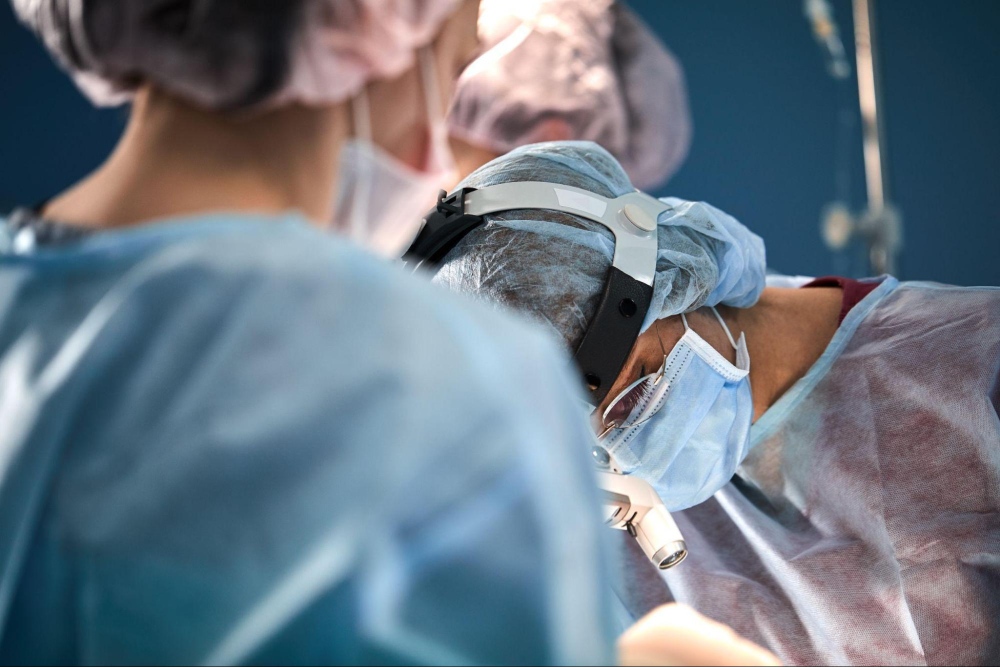
Many abdominal emergencies are treatable, but successful outcomes depend on timely assessment and appropriate surgical planning. As shown in Inside OT, the surgical team’s expertise ensures that even complex cases are managed to the highest standard of care.
Early intervention—such as seeking appendix surgery in Singapore for persistent pain—can prevent the severe complications of a rupture.
Abdominal pain is a critical warning sign that should never be ignored. Whether it is a sharp pain in the lower right or intense burning in the upper stomach, a professional evaluation is essential. In many cases, consulting a gallbladder surgeon or a hepatobiliary specialist early can help you avoid the risks of life-threatening infections and long-term complications.
Furthermore, if your symptoms include persistent burning or nausea, a specialist may recommend gastroscopy services in Singapore to rule out conditions like gastric ulcers, which can often mimic more urgent surgical emergencies.
As Seetharam noted after her recovery, “I will tell my son if something happens… otherwise, the problem may worsen.
Watch the full Inside OT Episode 8 on Mediacorp.
Transcript
0:03 It felt like I was dying
0:04 It was more painful than giving birth
0:06 We think it may be the early stages of cholecystitis
0:09 We should operate within the next 24 to 48 hours
0:13 It’s very painful when you touch it
0:16 There’s a hole in the small intestine
0:18 The patient will die if we don’t operate soon
0:46 64-year-old Ang Bee Kim…
0:48 was diagnosed with Sjögren’s Syndrome eight years ago
0:52 It is a chronic autoimmune inflammatory disease
0:56 She quit her job at a restaurant…
0:58 to focus on recuperation
1:01 My sons noticed that when I walk or stretch,
1:04 I have shortness of breath
1:06 The doctor diagnosed it in 2014,
1:09 and I started taking medication in 2016
1:14 My medication is for life
1:17 I have to take about 16 tablets a day
1:21 I don’t work out due to breathlessness
1:24 My son advised me to use a wheelchair
1:29 If my wheelchair is not with me,
1:32 I’ll be worried
1:36 Ang had dealt with her illness positively all these years
1:40 However, a sudden pain in her lower right abdomen last month…
1:44 saw her admitted to the Emergency Department in Ng Teng Fong General Hospital (NTFGH)
1:48 She was then transferred to the Emergency Surgical Unit
1:54 It started in the morning
1:55 I felt a bit of pain…
1:57 after I woke up and had breakfast
1:59 During lunch, it was quite painful
2:02 It hurt more than it did during breakfast
2:05 Dinner was around 4 pm
2:07 My son ordered food for me
2:09 I ate a piece of fish and…
2:12 said that I couldn’t bear it any longer
2:13 I told him I had to see a doctor
2:17 No strength
2:19 The pain was unbearable
2:22 It was so painful…
2:23 that I couldn’t even touch it
2:24 The pain was excruciating if I did
2:28 This patient has appendicitis
2:32 Her condition is more complicated as compared to other patients…
2:36 due to her autoimmune condition,
2:39 known as Sjögren’s disease
2:42 One, two, three
2:45 Since her body produces blood clots,
2:48 she has been taking anticoagulants
2:50 The biggest problem going into this operation…
2:54 are the anticoagulants she has been taking,
2:56 which will make it more difficult for the blood to coagulate
2:59 We need to give her some medicine…
3:01 to correct the coagulability…
3:04 and take her off anticoagulants…
3:07 before the appendicitis operation can be carried out
3:11 (Appendicitis can happen to anyone)
3:15 (However, it is more common among those between the ages of 10 and 30)
3:21 (A ruptured appendix could lead to a life-threatening abscess or peritonitis)
3:29 When the doctor told me that…
3:30 the appendix would have ruptured…
3:32 if I had gone any later,
3:34 I got the shock of my life
3:36 I said, “Oh dear,
3:37 “thank goodness I came here earlier”
3:45 Ng Teng Fong General Hospital, which is located in Jurong East,
3:47 has 700 beds
3:51 Besides providing general medical care, treatment, and rehabilitation services,
3:56 the hospital has also established an Emergency Surgical Unit…
3:59 that provides emergency services 24 hours a day, all year round
4:10 Good morning
4:12 Good morning, auntie
4:15 Let’s draw the curtains, please
4:18 Let’s check the abdomen
4:21 The Emergency Surgical Unit sees an average of 6,000 patients annually,
4:24 with about 4,000 of them coming from the hospital’s emergency department
4:29 The most commonly seen cases include appendicitis, stomach ulcers,
4:33 gallstones and life-threatening cases of intestinal obstructions
4:37 All surgeons employed by the hospital…
4:39 must take turns working a shift in the Emergency Surgical Unit…
4:41 for four days every month
4:43 We can take the stairs
4:45 Let’s go
4:47 Dr Oh Han Boon is on shift today
4:50 He’s been doing his rounds with the Emergency Surgical Unit team…
4:53 since early this morning
4:54 Doctors can’t afford to waste any time
4:56 They usually jog from one ward to another
5:01 Dr Oh will be performing an emergency operation…
5:03 soon after making his rounds
5:07 I’ll ask the oesophageal specialist…
5:10 to come and see you, okay?
5:12 This patient felt stomach pains in the morning…
5:16 and came to the emergency department
5:17 There were no abnormalities in her blood test results…
5:19 or her hepatobiliary index
5:22 She didn’t have a fever either
5:23 However, she was in considerable pain during our examination
5:28 We suspected that she might be in the early stages of cholecystitis,
5:33 so we arranged for an emergency ultrasound…
5:37 to check for signs of inflammation in the liver and gallbladder
5:41 The patient seeking consultation…
5:42 is Ng Li Ching, a 44-year-old real estate agent
5:46 Her poor eating habits due to her hectic work schedule…
5:50 have resulted in a myriad of gastrointestinal problems
5:54 I had always assumed that they were just gastric pains
5:56 I would go to the 24-hour clinic if it wasn’t too painful
6:00 I was admitted at about 5 am that day
6:04 I had been feeling unwell since 11 pm the previous night…
6:08 and I had taken some medicine for it
6:09 I was still experiencing pain at about 5 am
6:12 I told my husband that I needed to go to the hospital
6:14 It felt like my stomach was burning
6:17 I experienced nausea…
6:20 and the pain was so intense that I felt an incredible strain on my back
6:26 It felt like I was dying
6:28 It was more painful than giving birth
6:31 The ultrasound revealed multiple gallstones
6:36 Our advice was to immediately carry out…
6:39 a laparoscopic cholecystectomy
6:47 (Foreign autopsy reports have revealed gallstones in 20% of men and 30% of women)
6:55 (Many people may have unknowingly lived with gallstones their entire lives)
7:04 Gallstones can cause many problems
7:07 Cholecystitis may occur if the gallstone is too big
7:10 A small gallstone could easily enter the bile duct…
7:14 and cause inflammation in the bile duct or jaundice
7:16 There may be a blockage in the pancreas if the gallstone is too deep
7:20 This can lead to breathing difficulties or even organ damage…
7:24 if the pancreatic inflammation is severe
7:27 The probability of death could be as high as 50 percent
7:30 When we suspect that someone is in the early stages of cholecystitis,
7:35 an operation should be carried out within the next 24 to 48 hours of detection
7:51 (Ng Teng Fong General Hospital)
7:58 Ng, who was found to have gallstones,
8:01 is now undergoing an operation after general anaesthesia
8:04 This operation is completed…
8:05 with the help of small instruments and a camera
8:12 Sometimes, the duodenum, the stomach, the liver…
8:15 and even the large intestine may be connected to the inflamed gallbladder
8:19 We have to carefully cut the surrounding intestines and stomach
8:25 After that, we cut the cystic duct…
8:28 and the gallbladder vessel between the bile ducts
8:32 Ensuring that these organs are not damaged is our biggest challenge
8:35 The patient may require a second or even a third operation…
8:38 if the bile duct is damaged,
8:42 The cystic duct must be cut during the removal of the gallbladder
8:45 However, it may lead to serious problems like peritonitis or jaundice,
8:49 if the bile duct is damaged in the process,
8:52 causing bile leakage or bile duct obstruction
8:55 After determining the area to be cut…
8:58 around the cystic duct and the cystic artery,
9:01 Dr Oh used a pair of forceps to make incisions and sutures,
9:04 ligating the cystic duct and the artery
9:07 The gallbladder is separated from the liver after the cuts have been made
9:11 Finally, the gallbladder is removed through the umbilicus
9:18 There are many gallstones
9:20 There are so many gallstones
9:22 A lot of them
9:25 There are still many gallstones left
9:30 The patient experienced intense pain…
9:34 because of this large gallstone at the top
9:37 It obstructed the neck of the gallbladder
9:40 This is the biggest gallstone
9:42 There are other large gallstones as well
9:44 This one is about two centimetres
9:46 This is the biggest one
9:48 We will return these to the patient
9:52 After the operation, Dr Oh immediately did an endoscopy…
9:56 to ensure that the patient wasn’t suffering from gastritis or gastric ulcers,
10:00 both of which have similar symptoms to gallbladder inflammation
10:04 Thankfully, no abnormalities were found in the patient’s stomach
10:13 One, two, three
10:16 Ang, who has been diagnosed with appendicitis,
10:19 is in the operating theatre…
10:21 getting ready to undergo a laparoscopic appendicectomy
10:24 This operation is estimated to take 30 minutes to complete
10:29 We used pinhole incisions to perform this appendicitis operation
10:34 We made three small incisions in the abdomen
10:36 The biggest incision was about one centimetre long
10:39 The main objective was to…
10:42 cut off the blood vessels around the appendix…
10:45 and prevent the bleeding before removing the appendix
10:50 Dr Thng inserted special surgical tools and a camera…
10:53 into the patient’s abdomen to remove the appendix
10:57 Patients usually have shorter recovery times when they undergo laparoscopic surgeries
11:01 The recovery process is also less painful and leaves less obvious scars
11:05 However, not all patients are suitable for laparoscopic surgeries
11:09 If the appendix were to rupture, spreading the infection beyond the appendix,
11:13 or there is an abscess,
11:15 the patient may need to undergo an open appendicectomy…
11:18 so that it’s easier to clean the abdominal cavity
11:21 When performing an operation for appendicitis, it’s important…
11:24 to remove the appendix…
11:27 and ligate the blood vessels…
11:29 to prevent bleeding
11:30 The area around the appendix must be thoroughly cleaned…
11:34 to prevent bacterial infections in future
11:37 These are the two critical areas for such operations
11:42 20 minutes into the surgery,
11:45 something that Dr Thng feared the most has happened
11:49 The water has no pressure
11:51 The water is not flowing
11:53 Come on
11:55 The patient’s appendix was slightly ruptured,
11:58 so contaminated fluids were flowing out from it
12:02 There was a danger of bacterial infection
12:04 Any delays could be fatal
12:18 (Ng Teng Fong General Hospital)
12:24 There were complications 20 minutes into Ang’s surgery
12:28 A hole was discovered in her appendix
12:32 The water is not flowing
12:34 Come on
12:35 We need to clean the abdominal area…
12:39 and suck out the contaminated fluids
12:42 There may be a chance that the patient will die if this is delayed
12:46 The procedure was successfully completed by Dr Thng and his team,
12:51 so the patient didn’t have to undergo an open appendicectomy
12:58 We have removed the patient’s appendix
13:01 The patient’s condition usually improves once the appendix has been removed
13:05 This is the patient’s appendix
13:08 The patient is usually admitted to the general ward at this point…
13:11 and will be discharged after a couple of days of recuperation
13:15 The procedure was very fast…
13:16 and you won’t feel it anyway
13:19 The best thing to do, when you feel any pain,
13:22 is to see the doctor without hesitation
13:24 You won’t know when it will rupture
13:28 This is very important
13:30 Appendicitis is generally beyond our control
13:33 It isn’t caused by vigorous exercise after meals
13:38 In such situations, professional help should be sought at the hospital
13:42 Don’t put it off until the condition worsens
13:51 Good morning, Ms Ng
13:54 How are you?
13:56 Ng, a real estate agent who underwent…
14:00 an operation to remove her gallstones the day before,
14:02 was greeted by her surgeon, Dr Oh, and a gift when she woke up
14:08 Let me show you the cover first
14:11 Do you want to see how many stones you had?
14:13 Look at all these
14:14 You “made” them
14:15 My first thought was,
14:17 “Did you pick some stones from the garden?”
14:21 I didn’t expect them to be this big
14:22 The biggest stone was stuck…
14:24 at the neck of the gallbladder,
14:26 which was why you were in such severe pain
14:27 I was shocked
14:29 The first thing I asked him was how long I’ve had these gallstones for
14:35 He said it must have been quite a few years
14:38 Your stomach scope is normal
14:40 There aren’t any ulcers,
14:42 so just try to eat more healthily
14:44 Avoid food that is fatty or oily
14:45 Thank you
14:46 No problem, so we’ll let you go home today
14:48 Goodbye
14:51 When I was working in the real estate industry,
14:54 I led a fast-paced life
14:57 My meals were irregular
14:59 I often had to socialize for work
15:01 There was a tendency to eat greasy food during these gatherings
15:06 It’s not good for your digestion
15:09 I feel that my digestion has improved
15:12 It is now a fast and smooth process
15:15 My problem has been resolved
15:19 This is the fourth day of Dr Thng’s shift…
15:23 in the Emergency Surgical Unit this month
15:25 Dr Thng enjoys spending his breaks in the hospital’s garden
15:30 The fresh air here helps him to relieve his stress from work
15:37 This tranquillity, however, is short-lived
15:46 Seetharam, a 79-year-old lady, awaits him in the ward
15:51 To avoid troubling her children, Seetharam, a retiree of many years,
15:55 chose to live alone after her husband passed away
15:58 Today, she was brought to the hospital because of a dislocated joint
16:02 She unexpectedly discovered that she was suffering from something more serious
16:06 They took an X-ray and found a hole
16:11 They told me that I needed an operation
16:15 I got a shock
16:16 My son said,
16:17 “Don’t worry, they know what to do”
16:21 We did a scan for her
16:23 The scan showed a lot of trapped air in her stomach
16:27 There was a knot in the small intestine…
16:30 that cut off blood flow to the small intestine…
16:34 and created a hole in it
16:38 This is an emergency case
16:40 It is considered a P1, or Priority 1, operation
16:45 The Emergency Surgical Unit considers the urgency of each case…
16:48 and categorizes them as P1, P2 or P3 cases
16:53 The least severe cases are in P3 while the most severe ones are in P1
16:58 P1 patients must undergo surgery within two hours
17:01 There will be a bacterial infection…
17:05 when the contaminated fluids from the small intestine enter the stomach
17:08 The patient could die in a short time if the operation is not done promptly
17:13 That’s why we had to operate on her within two hours…
17:17 to remove the diseased part of the small intestine…
17:19 and reconnect the healthy parts
17:22 (A perforation in the small intestine can cause severe and life-threatening infections)
17:31 (Research has shown that such patients who are transferred to the ICU…)
17:34 (after an emergency operation have a high chance of complications or death)
17:41 A perforated bowel is also known as a ruptured bowel
17:44 It can lead to septicaemia…
17:46 and medical conditions like tachycardia, shortness of breath, fever,
17:51 a state of unconsciousness and so on
17:53 This is why Dr Thng has to immediately operate on Seetharam
17:59 It looks like the tightening occurred here
18:02 This lady is frail and prone to illness
18:05 The risks increase as time passes
18:09 She is in danger of getting a heart attack, a stroke or a bacterial infection,
18:15 so the operation must be completed as quickly as possible
18:18 With the advent of minimally invasive surgery that avoids the use of large incisions,
18:21 open surgeries are on the decline in the modern medical industry
18:26 In Seetharam’s case, however,
18:28 an open surgery would give the surgeons a better view…
18:31 to ensure greater accuracy when resectioning the small intestine
18:35 Firstly, we have to determine the position of the knot
18:38 A small intestine is five to six metres long,
18:40 so we have to first figure out where the knot is…
18:43 before we can undo it
18:47 Here you go
18:50 The hole is here
18:52 You can see it
18:54 Secondly, we need to locate the hole
18:57 We will remove part of the small intestine once that has been done
19:02 The medical staff in the operating theatre, except those who are already dressed in blue,
19:06 must don an additional layer of white, protective clothing
19:10 This is because Seetharam…
19:11 has a Methicillin-resistant Staphylococcus aureus (MRSA) infection
19:14 This virus spreads through contact with an infected person
19:19 An MRSA infection causes the body to resist the effects of common antibiotics,
19:24 making it more difficult to treat many illnesses
19:26 It can also be life-threatening
19:30 Burn two sides
19:31 Stapler, please
19:33 Stapler
19:35 A special medical stapler is commonly used…
19:39 to clamp the small intestine…
19:41 and create an anastomosis
19:44 This method is faster
19:48 Can you get us two more reloads, please?
19:52 Every second counts in this operation
19:54 Dr Thng removed the diseased parts of the small intestine in one and a half hours
20:02 We found a hole in the small intestine during the operation
20:06 We removed this section of the small intestine…
20:09 before reconnecting the remaining sections
20:12 The patient will be transferred to the Intensive Care Unit (ICU)
20:15 She can be transferred to a general ward in a few days
20:22 Stitch
20:26 (One month after the operation)
20:30 Seetharam, who has completed the operation,
20:32 is staying temporarily in the hospital to recuperate…
20:35 while her son arranges to hire a helper
20:37 This operation has taught her a lesson
20:42 I will tell my son if something happens
20:45 I won’t hide it from him
20:49 I have to tell my son…
20:51 to bring me to the hospital to see the doctor
20:54 Otherwise, if I don’t tell my son,
20:56 the problem may worsen
21:01 The operating theatre may be a forbidding and daunting place to many,
21:07 but it is the battlefield where medical staff save lives
21:11 Surgeons are not superheroes,
21:14 but they serve as the protective barriers between patients and diseases…
21:16 when they don their blue battle gear,
21:22 doing their best to protect lives
21:49 Subtitles: CaptionCube