
Home » Pancreatitis
Pancreatitis Treatment and Surgery in Singapore

Dr Thng Yongxian
Medical Director & Senior Consultant Hepatopancreatobiliary Surgeon
MBBS • MMed • MRCS (IRE) • FRCSED • FAMS
Table of Contents
- What is Pancreatitis?
- Types of Pancreatitis: Acute, Chronic and Other Causes
- Signs and Symptoms of Pancreatitis
- Complications of Pancreatitis
- Causes of Pancreatitis
- Who Treats Pancreatitis?
- Diagnosis of Pancreatitis
- Treatment of Pancreatitis
- Pancreatitis Surgery
- Management & Clinical Treatment
- Frequently Asked Questions
- Contact Us
What is Pancreatitis?
Pancreatitis is inflammation of the pancreas, a gland involved in digestion and blood sugar regulation.
It can occur as acute pancreatitis, where symptoms develop suddenly and resolve over days, or chronic pancreatitis, where ongoing inflammation leads to lasting damage over time.
Common causes include gallstones, alcohol use and elevated triglyceride levels. Symptoms may include upper abdominal pain, nausea, vomiting and, in more severe cases, complications affecting digestion or overall health.
Early assessment helps determine the cause and guide appropriate treatment.
Types of Pancreatitis: Acute, Chronic and Other Causes
Pancreatitis can present in different forms, most commonly acute or chronic, with less common types linked to immune or genetic conditions. Each type differs in cause, duration and long-term impact.
Acute Pancreatitis
Acute pancreatitis is a sudden inflammation that develops over hours to days. It can range from mild to severe and may require hospital care in some cases.
Common causes include gallstones and alcohol use, and treatment focuses on supportive care and addressing the cause.
Chronic Pancreatitis
It is often linked to alcohol use, genetic factors or recurrent pancreatitis. Management focuses on symptom control and enzyme support, with surgery considered in selected cases.
Autoimmune Pancreatitis
It may resemble pancreatic cancer on imaging and often requires specific tests to confirm. This condition typically responds to medical treatment.
Hereditary Pancreatitis
Over time, this may increase the risk of chronic pancreatitis and requires ongoing monitoring.
When to seek medical attention: If you experience severe abdominal pain, recurrent episodes of pancreatitis or symptoms that do not improve, a medical evaluation can help determine the cause and guide appropriate treatment.
Signs and Symptoms of Pancreatitis
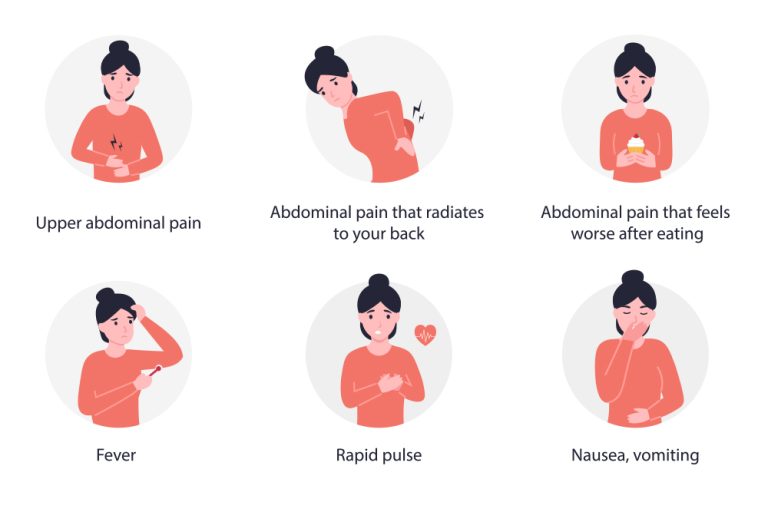
Recognising pancreatitis symptoms early is important, as delays may lead to complications and affect pancreatic function. Symptoms may differ between acute and chronic pancreatitis.
Seek medical attention if you experience severe or persistent abdominal pain or symptoms suggestive of pancreatitis.
Acute Pancreatitis Symptoms
-
Severe upper abdominal pain:
Sudden in onset, may radiate to the back and is often constant, sometimes worsening after eating.
-
Nausea and vomiting:
Common and may be persistent.
-
Fever and rapid pulse:
May indicate more severe inflammation and require prompt assessment.
-
Abdominal tenderness:
Upper abdomen may be tender to touch.
-
Jaundice:
May occur if bile duct obstruction is present.
Chronic Pancreatitis Symptoms
-
Persistent or recurring upper abdominal pain:
May worsen after eating or alcohol intake.
-
Steatorrhoea (oily or pale stools):
Due to poor fat absorption; stools may appear greasy or difficult to flush.
-
Unintentional weight loss:
Often related to malabsorption or reduced intake.
-
Diabetes mellitus:
Chronic pancreatitis progressively damages insulin-producing cells, leading to pancreatogenic diabetes (Type 3c), which requires careful management distinct from Type 1 or Type 2 diabetes
-
Nausea and vomiting:
May occur during symptom flare-ups.
Complications of Pancreatitis
Severe or long-standing pancreatitis may lead to complications, particularly if not treated early. These may include:

Pancreatic Infection
Pancreatitis can lead to pancreas infection, requiring prompt antibiotic treatment or surgery to remove infected tissue.

Pancreatic Pseudocyst
Fluid and debris accumulating in cyst-like pockets in the pancreas can cause pain, infection, or even rupture.

Malnutrition
Chronic pancreatitis can impair the pancreas’s ability to produce digestive enzymes, leading to malabsorption and weight loss.

Diabetes
Damage to insulin-producing cells in the pancreas from chronic pancreatitis may result in diabetes.
Causes of Pancreatitis
Understanding the underlying causes of pancreatitis contributes to its prevention and treatment. Common causes include:

Gallstones
Gallstones are a common cause of acute pancreatitis. When a stone moves into the bile duct, it can block the normal flow of pancreatic enzymes into the small intestine.
As a result, these enzymes build up within the pancreas and begin to irritate and damage the tissue. This is known as gallstone pancreatitis or biliary pancreatitis.

Excessive Alcohol Consumption (Alcoholic Pancreatitis)

Genetic Factors

Medications

High Triglyceride Levels

Other Causes
Who Treats Pancreatitis?
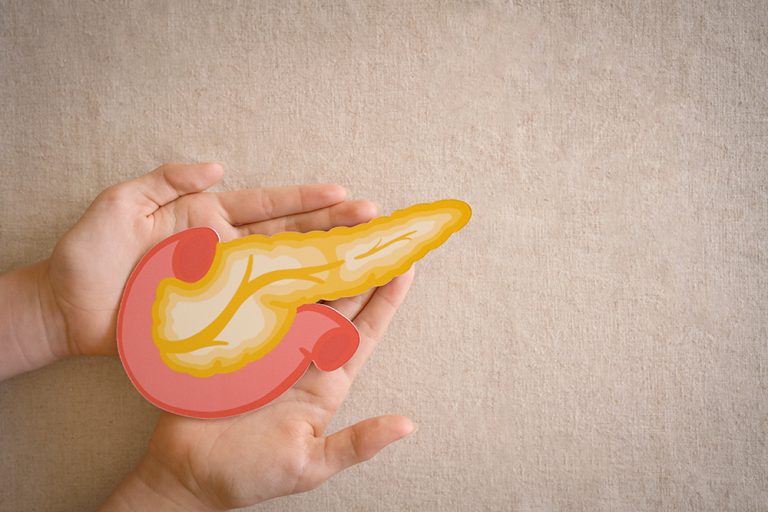
Pancreatitis is typically managed by a team of specialists, including gastroenterologists and hepatopancreatobiliary (HPB) surgeons, depending on the severity and underlying cause.
Many cases are initially assessed and managed medically, particularly when the condition is mild or uncomplicated.
In situations where there are complications or an underlying structural issue, such as gallstones, pancreatic collections or ductal problems, further evaluation by a surgeon may be considered as part of the overall management plan.
Diagnosis of Pancreatitis
Diagnosis of pancreatitis involves a combination of clinical assessment, blood tests and imaging to confirm inflammation of the pancreas and identify the underlying cause.
-
Clinical assessment
Evaluation typically begins with a review of symptoms, medical history and a physical examination.
-
Blood tests
Blood tests such as amylase and lipase help detect pancreatic inflammation, while liver function tests may indicate bile duct obstruction.
-
Imaging tests
Imaging is used to assess the pancreas and identify causes or complications:
-
Ultrasound: Commonly used to detect gallstones
-
CT Scan: Evaluates inflammation and complications
-
MRI/MRCP: Provides detailed imaging of the pancreatic ducts
-
Further evaluation
In selected cases, procedures such as ERCP or endoscopic ultrasound (EUS) may be used for more detailed assessment or treatment.
Treatment of Pancreatitis
Treatment of pancreatitis focuses on relieving symptoms, supporting recovery and addressing the underlying cause. The approach depends on whether the condition is acute or chronic, its severity and any associated complications.

When Is Treatment Required?
Mild cases of pancreatitis may improve with supportive care, but more severe episodes can require further treatment and closer monitoring. Treatment is also directed at the underlying cause, such as gallstones, alcohol-related inflammation or pancreatic duct obstruction.
Pancreatitis Surgery
In selected cases, pancreatitis may require surgical or procedural intervention depending on the severity of inflammation and disease progression.
When Is Surgery Required?
Surgery or interventional procedures may be considered when complications arise or when the condition does not improve with medical treatment.
In chronic pancreatitis, procedures may also be used to relieve ductal obstruction or persistent symptoms. The approach is individualised based on the clinical situation.
Types of Pancreatic Cancer Surgery
Different procedures may be considered depending on the cause and severity of pancreatitis:

Laparoscopic cholecystectomy
Removal of the gallbladder is commonly performed in gallstone-related pancreatitis to reduce the risk of recurrence.

Distal Pancreatectomy
A pancreatectomy involves the removal of the body and tail of the pancreas and may be considered in specific situations affecting these regions.

Whipple procedure (Pancreaticoduodenectomy)
In selected cases involving complications affecting the head of the pancreas, the Whipple procedure may be considered to remove the affected portion and reconstruct the digestive tract.

Drainage of pancreatic collections
Fluid collections such as pancreatic pseudocysts or walled-off necrosis (WON) may be drained using endoscopic or surgical techniques if they persist or cause symptoms.

Surgical management of pancreatic necrosis (Necrosectomy)
In severe cases, necrosectomy may be performed to remove infected or non-viable pancreatic tissue.

Endoscopic procedures (ERCP)
Endoscopic Retrograde Cholangiopancreatography is used to remove bile duct stones or relieve obstruction affecting the pancreas.
Management & Clinical Treatment
Management of pancreatitis focuses on relieving symptoms, treating the cause and preventing complications, depending on whether the condition is acute or chronic.
During acute episodes, care is often supportive, including intravenous (IV) fluids and pain management. Patients may also be kept nil per os (NPO), meaning temporarily not allowed to eat or drink, before gradual reintroduction of diet as symptoms improve.
Treatment is then directed at the cause, such as gallstones, alcohol-related inflammation or metabolic factors.
In chronic pancreatitis, ongoing care may include pain management and pancreatic enzyme replacement therapy (PERT) to support digestion and nutrient absorption.
Lifestyle Measures
Simple lifestyle changes can play a role in reducing recurrence and supporting pancreatic health over time.
-
Limit or avoid alcohol: Especially important in alcohol-related pancreatitis
-
Adopt a balanced, lower-fat diet: Helps reduce strain on the pancreas
-
Manage underlying conditions: Such as high triglyceride levels
-
Avoid smoking: Associated with progression of pancreatic disease
-
Nutritional support (if needed): May be recommended in chronic pancreatitis
Concerned About Your Pancreatic Health?
Pancreatitis can vary in how it presents and progresses, and the appropriate approach often depends on the underlying cause and individual circumstances.
If you are unsure about your symptoms or diagnosis, a consultation with our pancreatic specialist can help provide clarity and next steps.
A second opinion may also be helpful if you would like further reassurance.

The specialist leading your care
Dr Thng Yongxian
Senior Consultant Pancreas & Hepatobiliary Surgeon
MBBS (SG) • MMed (Surg) • MRCS (Ire) • FRCSEd (Gen) • FAMS (Surg)
Dr Thng Yongxian is a dual fellowship-trained HPB and general surgeon with specialised training in minimally invasive and complex abdominal surgery. He previously served as Clinical Lead for HPB Surgery and has extensive experience managing conditions of the liver, gallbladder, pancreas and bile ducts.
In addition to pancreatic cancer surgery, Dr Thng performs advanced laparoscopic procedures and has contributed to national initiatives, including serving on the Ministry of Health Laparoscopic Cholecystectomy Clinician Workgroup for value-driven care.
His surgical work has been presented at international conferences, reflecting ongoing engagement in clinical practice and surgical education.
Patients under his care receive careful evaluation and individualised treatment planning based on their clinical condition and overall health.
Keyhole Surgery Expertise
Extensive experience in minimally invasive abdominal procedures.
Focused on Patient Safety
Care delivered with careful surgical planning and risk assessment.
Timely Access to Care
Credentialed at major private hospitals, with coordinated scheduling for consultations and procedures
Support with Insurance Pre-Authorisations
Assistance with documentation and insurance processes where applicable.
Need a Specialist Opinion?
If you have concerns about your symptoms or recent test results, a consultation can help clarify the next steps.
Contact our clinic to arrange an appointment. Assistance with insurance processes is available.
Frequently Asked Questions
Where is pancreatitis pain located?
Pancreatitis pain is usually felt in the upper abdomen, just below the ribcage, and may radiate to the back. It is often constant and may worsen after eating.
Is pancreatitis serious?
Pancreatitis can range from mild to severe. Mild cases often improve with treatment, while severe cases may lead to complications such as organ failure. Chronic pancreatitis may affect digestion and blood sugar control over time.
What happens if pancreatitis is left untreated?
Can pancreatitis be cured completely?
How is pancreatitis diagnosed?
Diagnosis involves clinical assessment, blood tests and imaging. Blood tests such as amylase and lipase detect inflammation, while imaging (e.g. ultrasound, CT scan, MRI/MRCP) helps identify causes and complications.
In selected cases, ERCP or endoscopic ultrasound (EUS)< may be used. Severity may be assessed using systems such as the Glasgow score, APACHE II or Revised Atlanta classification.
Will I need surgery for pancreatitis?
Can pancreatitis come back?
How long does pancreatitis last?
What foods should I avoid with pancreatitis?
Is pancreatitis the same as pancreatic cancer?
No. Pancreatitis is inflammation of the pancreas, while pancreatic cancer is a separate condition. Some symptoms may overlap, and further evaluation may be required in certain cases.
Corporate & Personal Insurance Plans
Our Clinic Location
@ Gleneagles Hospital Annexe Block
Precision Surgical Centre @ Gleneagles Hospital Annexe Block
- 6A Napier Road, #03-32 Gleneagles Annexe Block Singapore 258500
- (65) 9838 5827
- (65) 9838 5827
- gleneagles@precisionsurgicalcentre.com
-
Mondays to Fridays: 9.00am - 5.00pm
(Lunch: 1:00pm - 2:00pm)
Saturdays: 9.00am - 1.00pm
Sundays & PH: Closed
Need Help Navigating Your Health?
If you’re experiencing symptoms or want to understand your treatment options, contact us today.